

Best AI Agents in 2027 That Actually Save Time and Get Work Done
Discover the best AI agents in 2027, compare leading platforms like ChatGPT, Claude, Gemini, Microsoft Copilot, Zapier, Lindy, and Salesforce Agentforce, and learn which AI tools can help individuals and businesses automate tasks, improve productivity, and simplify everyday workflows.


Artificial intelligence has moved beyond answering questions. A growing number of AI tools can now research information, organize tasks, interact with applications, analyze documents, and complete parts of a workflow with limited human involvement.
This shift is bringing AI agents into everyday business operations.
But with so many platforms claiming to offer intelligent agents, choosing the right one is becoming increasingly difficult. Some tools are designed to automate repetitive office work, others specialize in software development, customer support, research, or connecting different business applications.
The important question is no longer simply which AI agent is the most powerful. It is which one can reliably solve a problem that would otherwise consume your time.
In this guide, we explore some of the most useful AI agent platforms to consider in 2027, what makes each different, and how individuals and businesses can choose the right technology.
What Makes an AI Agent Worth Using?
An AI agent should offer more than an impressive conversation.
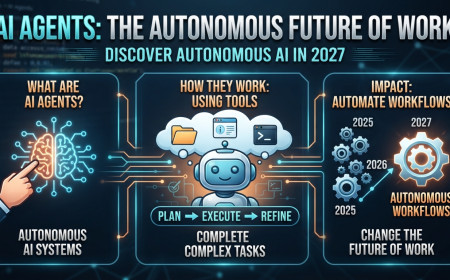
A useful agent can receive an objective, determine the steps needed to accomplish it, use available tools, evaluate the results, and continue working toward the objective within its permissions.
For example, a conventional AI assistant might help write a customer follow-up email. An agent-based workflow could identify unanswered customer inquiries, gather relevant account information, prepare personalized responses, and organize them for approval.
That difference matters.
However, not every product marketed as an AI agent offers the same level of independence. Some require approval before every important action, while others can execute several connected tasks automatically.
The best choice depends on the work involved, the available integrations, reliability, security, and the level of control a user wants to maintain.
For a deeper explanation, read our guide: AI Agents Explained: What They Are, How They Work, and Why They Could Change Everyday Work in 2027
Best AI Agents to Consider in 2027
Rather than treating every platform as a direct competitor, it makes more sense to compare AI agents according to the problems they are designed to solve.
1. ChatGPT: A General-Purpose AI Agent for Different Tasks
ChatGPT has developed beyond its original question-and-answer experience. Its agent capabilities can help with research, browsing, data analysis, document handling, and multi-step tasks.
For individuals and businesses already using ChatGPT, this creates an opportunity to bring several types of work into one environment.
Potential applications include:
-
Researching competitors and industry developments.
-
Collecting and organizing information.
-
Analyzing spreadsheets and business documents.
-
Preparing reports and presentations.
-
Working through multi-step research tasks.
Its biggest advantage is versatility. Users can approach different problems without necessarily adopting a separate specialist platform for each one.
However, access to connected applications and the ability to take actions depend on the particular feature, subscription, and permissions available.
Best suited for: Individuals, researchers, entrepreneurs, and teams that need a flexible AI assistant capable of handling different types of work.
2. Claude: Useful for Research, Writing, and Software Development
Claude, developed by Anthropic, is another major platform in the evolving AI agent landscape.
It is particularly relevant for work involving long documents, detailed analysis, writing, and software development.
Claude's agent-oriented capabilities and Claude Code can support workflows that involve examining codebases, making changes, running tests, and working through technical problems.
For businesses, potential applications include:
-
Reviewing lengthy reports and documents.
-
Organizing research findings.
-
Supporting software development.
-
Analyzing complex written information.
-
Assisting with structured business documentation.
Its usefulness comes from combining language-based reasoning with tools that allow it to work beyond a simple conversation.
Best suited for: Writers, developers, researchers, and teams working with large amounts of written or technical information.
3. Google Gemini: An Option for Google Workspace Users
Businesses that already depend on Gmail, Google Drive, Docs, Sheets, and other Google services may find Gemini particularly relevant.
Its integration with Google's ecosystem makes it useful for organizations that want AI assistance within familiar productivity tools.
Potential applications include:
-
Working with information in documents and spreadsheets.
-
Summarizing business communications.
-
Supporting research and planning.
-
Organizing information across Workspace.
-
Building and using specialized AI workflows.
The main consideration is how much of the required agent functionality is available in the user's specific Google plan and region.
Best suited for: Small businesses, professionals, and organizations that rely heavily on Google Workspace.
4. Microsoft Copilot: AI Agents for Microsoft-Based Workplaces
Microsoft is bringing agent capabilities into its broader business software ecosystem.
Microsoft Copilot and Copilot Studio provide different ways to use and create AI-powered experiences across Microsoft products and business workflows.
For organizations already using Microsoft 365, this can reduce the need to introduce entirely separate software environments.
Possible applications include:
-
Assisting with document and spreadsheet workflows.
-
Supporting internal employee requests.
-
Automating business processes.
-
Connecting organizational information.
-
Building specialized agents for departments.
Copilot Studio is especially relevant when an organization wants to create agents tailored to its own processes.
Best suited for: Businesses that already operate through Microsoft 365 and want AI capabilities connected to their existing systems.
5. Zapier Agents: Connecting Different Business Applications
One of the biggest challenges for small businesses is that their work is spread across multiple platforms.
Customer inquiries may arrive through a website, sales information may be stored in a CRM, and internal communication may happen through email or messaging applications.
Zapier Agents focuses on connecting AI-driven actions with applications across its integration ecosystem.
For example, a business could design a workflow that identifies a new customer inquiry, organizes the relevant information, and prepares a follow-up task.
Potential applications include:
-
Connecting customer management systems.
-
Organizing incoming leads.
-
Coordinating repetitive administrative tasks.
-
Triggering actions across different applications.
-
Supporting marketing and sales workflows.
Its appeal is the ability to connect existing tools instead of forcing businesses to replace their entire software setup.
Best suited for: Small businesses and teams that depend on multiple applications and want to connect their workflows.
6. Lindy: AI Assistance for Everyday Business Administration
Lindy focuses on creating AI assistants that can support routine professional tasks.
Depending on the configured integrations and permissions, businesses can use it for administrative workflows involving communication, scheduling, and information management.
Examples include:
-
Organizing incoming emails.
-
Preparing meeting-related information.
-
Supporting scheduling workflows.
-
Managing repetitive administrative processes.
-
Coordinating tasks across connected applications.
For a small business owner who spends hours managing everyday communications, this type of assistance can be particularly valuable.
Best suited for: Entrepreneurs, consultants, freelancers, and small teams looking to reduce administrative workloads.
7. Salesforce Agentforce: Agents for Customer Relationships
Businesses with more advanced customer relationship management requirements may find Salesforce Agentforce worth exploring.
It focuses on AI agents that work within business processes and customer data environments.
Potential applications include:
-
Supporting customer service operations.
-
Assisting with sales processes.
-
Handling selected customer inquiries.
-
Organizing customer information.
-
Supporting service workflows.
However, its value is more apparent for organizations already using Salesforce or operating at a scale that justifies a dedicated CRM environment.
Best suited for: Growing businesses and larger organizations with established customer relationship management systems.
Quick Comparison: Which AI Agent Should You Choose?
| AI platform | Main strength | Suitable users |
|---|---|---|
| ChatGPT | General-purpose tasks and research | Individuals and teams |
| Claude | Writing, analysis, and coding | Professionals and developers |
| Gemini | Google Workspace workflows | Google-based businesses |
| Microsoft Copilot | Microsoft business ecosystem | Microsoft 365 users |
| Zapier Agents | Cross-application automation | Small businesses |
| Lindy | Administrative assistance | Entrepreneurs and freelancers |
| Salesforce Agentforce | Customer relationship workflows | CRM-driven businesses |
This is a use-case comparison, not a universal ranking. Capabilities, pricing, availability, and integration requirements can change.
How to Choose the Right AI Agent for Your Business
Choosing an AI agent should begin with identifying the work that needs to be completed.
A business does not necessarily need the most advanced AI platform available. In many situations, a simple agent connected to two or three applications can deliver more practical value than a complex system requiring significant setup.
Consider these five factors before choosing a platform.
1. Identify the Repetitive Work
Start by listing tasks that consume time without requiring much human judgment.
These might include organizing emails, preparing reports, collecting information, or categorizing customer inquiries.
2. Check Application Compatibility
An AI agent becomes more useful when it can work with the software a business already uses.
Before subscribing, check whether the platform supports the required integrations and whether those integrations permit the actual actions you need.
3. Understand the Cost
Some platforms use monthly subscriptions, while others charge according to usage, credits, or completed actions.
A seemingly inexpensive agent can become costly if it performs thousands of operations every month.
4. Evaluate Security and Permissions
Giving an AI agent access to customer information, business documents, or financial systems creates additional responsibilities.
Businesses should use restricted permissions, maintain activity records, and require human approval for sensitive actions.
5. Measure Actual Results
The purpose of adopting an AI agent is to improve a business process.
Measure whether it reduces the time required to complete tasks, improves response times, reduces errors, or allows employees to focus on more valuable work.
An impressive demonstration is not the same as a reliable business solution.
Can Small Businesses Benefit From AI Agents?
Absolutely, but the biggest opportunity may not be replacing employees.
For a small business, the more realistic opportunity is reducing the amount of repetitive work that prevents owners and employees from focusing on customers, products, and growth.
Imagine a five-person company where every employee handles several responsibilities.
One person manages customer inquiries, another handles marketing, and someone else manages administration. A properly configured AI agent could assist with parts of these workflows without requiring the company to hire another employee for every new responsibility.
However, the business still needs people to establish priorities, review important decisions, handle unusual situations, and maintain customer relationships.
We explore this opportunity in more detail in our related guide: How Small Businesses Can Use AI in 2027: 12 Practical Ways to Save Time, Reduce Costs, and Grow
Are AI Agents Ready to Work Without Human Supervision?
This is one of the most important questions businesses should consider before adopting agent-based technology.
Although AI agents can complete increasingly complex tasks, they are not automatically reliable.
They can misunderstand instructions, use incorrect information, encounter unexpected application behavior, or take actions that do not match a business's intentions.
The consequences depend on the task.
An agent preparing a draft social media post creates a relatively manageable risk. An agent sending customer refunds, changing financial records, or communicating contractual decisions creates a much greater one.
A sensible approach is to begin with supervised workflows.
Allow the agent to collect information, prepare recommendations, and complete low-risk tasks. Require human approval before important external actions or irreversible decisions.
As the system demonstrates reliability, businesses can consider expanding its responsibilities within clearly defined boundaries.
The Real Competition Is Not Between AI Agents
The rapid growth of AI agents has created an interesting misconception: businesses must choose the most advanced platform to remain competitive.
That is not necessarily true.
A company using a simple AI agent to respond to customer inquiries more efficiently may gain more practical value than another company investing in an elaborate autonomous system that employees barely use.
Technology becomes valuable when it solves an actual problem.
The next stage of AI adoption may therefore be less about collecting multiple agents and more about understanding which responsibilities should be automated, which decisions require human judgment, and how both can work together.
For businesses entering this space in 2027, that distinction could matter more than the name of the AI platform they choose.
Final Thoughts
AI agents are becoming an important part of the way people and businesses interact with technology. But their value should not be measured by how autonomous or sophisticated they appear.
It should be measured by the problems they solve.
For some businesses, that may mean connecting applications and reducing administrative work. For others, it may involve research, software development, customer support, or improving internal operations.
The smartest approach is to start small, choose tools based on actual needs, and expand automation only when the results justify it.
The future of AI will not belong exclusively to businesses with the most advanced agents. It will also belong to those that understand how to use them responsibly and effectively.
Frequently Asked Questions
What's Your Reaction?
 Like
0
 Dislike
0
 Love
0
 Funny
0
 Wow
0
 Sad
0
 Angry
0














Comments (0)