

What If the Human Brain Always Thought It Was a Child—Could It Stop the Body From Aging?
Does the brain hold the master switch for human aging? Dive into the real neurobiology behind how the hypothalamus regulates our biological clock, what would happen if the brain permanently maintained a childlike state, and how modern longevity science is trying to unlock youthful cellular regeneration without losing adult wisdom.

Imagine waking up every single morning with the boundless energy, rapid healing, and fearless curiosity of an eight-year-old—not just for a decade, but for a century.
It sounds like the premise of a speculative sci-fi novel, yet it raises a deeply compelling scientific question: If the human brain genuinely believed it was still a child, could it command the physical body to stop aging?
To answer this, we have to look at how the brain actually communicates with the rest of the body, the biological mechanics of youth, and the surprising ways modern longevity researchers are already testing this exact hypothesis.
1. The Master Clock: How the Brain Actually Controls Aging
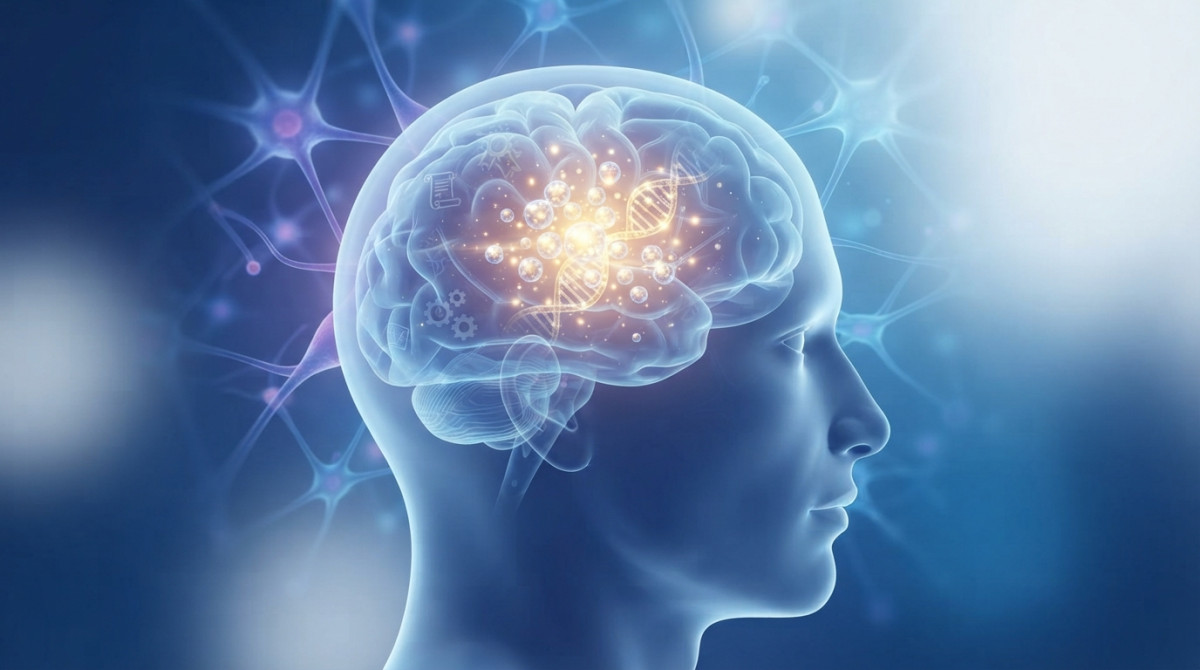
In human biology, aging is not merely passive wear and tear—it is heavily regulated by central signaling. At the center of this system sits the hypothalamus, a tiny, almond-sized region deep inside the brain that acts as the master conductor of your endocrine (hormone) system.
The hypothalamus communicates directly with the pituitary gland to regulate:
-
Growth hormone and tissue repair
-
Metabolism and energy expenditure
-
Stress responses (via cortisol)
-
Reproductive and sex hormones
As decades pass, neural stem cells in the hypothalamus gradually decline, and the region experiences chronic, low-grade neuroinflammation. When this "master clock" slows down, it sends downstream hormonal signals that trigger systemic aging—loss of muscle mass, slower cellular turnover, cognitive fatigue, and weakened immunity.
Remarkably, neurobiologists have tested what happens when you restore youth to this specific brain region. In landmark longevity studies, researchers transplanted youthful hypothalamic neural stem cells into middle-aged mice. The result? The treated mice retained sharper cognitive function, stronger muscles, and lived 10% to 15% longer than untreated mice.
In short, your brain really does act as a pacemaker for how fast your body ages.
2. What Would Happen If the Brain Locked Into a "Childlike" State?
Suppose a hypothetical human brain maintained the exact neurochemical profile and self-perception of a child indefinitely. Biologically and cognitively, several radical shifts would occur:
Accelerated Cellular Regeneration and Repair
Children possess extraordinary tissue-healing capabilities, higher baseline stem cell activity, and robust telomerase function—the enzyme that protects the ends of chromosomes (telomeres) every time a cell divides. If the brain continuously broadcast "growth and youth" signals, the body would theoretically clear out damaged cells faster and resist age-related degenerative conditions like cardiovascular disease or neurodegeneration.
Peak Neuroplasticity for Life
A child’s brain is an unmatched learning machine, driven by hyper-active neuroplasticity. Neural pathways form and rewire at lightning speed, allowing effortless language acquisition, motor skill mastery, and creative problem-solving. Retaining this state permanently would eliminate age-related cognitive decline and keep mental adaptability at its absolute peak.
The Developmental Paradox
However, locking the body into literal childhood biology creates a major physiological catch. Childhood is a building phase, not a maintenance phase. If the brain never triggered the hormonal transitions of adolescence and adulthood:
-
Skeletal growth plates might never fuse properly, leading to continuous, irregular bone growth or structural fragility.
-
Reproductive and metabolic systems would remain immature, leaving the body unable to regulate adult energy demands or hormone cycles.
3. Psychological Youth vs. Adult Wisdom
There is also a crucial distinction between biological youth and psychological maturity.
The prefrontal cortex—the brain region responsible for impulse control, long-term planning, emotional regulation, and risk assessment—does not finish developing until a person’s mid-twenties. If a brain truly believed it were a child in every sense, that individual would remain emotionally impulsive, easily overwhelmed, and reliant on external guidance forever.
The true ideal isn't keeping a child's mind—it is pairing an adult mind (with its accumulated wisdom, emotional depth, and self-awareness) with the cellular signaling of a child.
4. How Modern Science Is Trying to "Trick" the Body Into Staying Young
While humans cannot simply use willpower or positive thinking to convince the hypothalamus to halt aging, longevity science is actively working to replicate this exact effect at the cellular level:
-
Epigenetic Reprogramming: Researchers are studying how to reset the "epigenetic clock"—chemical markers on our DNA that tell cells how old they are. By using specific proteins (such as Yamanaka factors), scientists aim to remind older cells how to behave like young ones without erasing their specialized identity.
-
Hypothalamic and Exosomal Therapies: Following the discovery that hypothalamic stem cells release anti-aging microRNAs into cerebrospinal fluid, researchers are investigating targeted therapies that could restore youthful brain signaling without invasive transplants.
-
Neuroplasticity Training: Even without futuristic medicine, behaviors that mimic a child's relationship with the world—learning complex new skills, physical play, deep sleep, and novel environments—stimulate brain-derived neurotrophic factor (BDNF), keeping neural circuits measurably younger.
Final Thoughts
If the human brain permanently believed it was a child, it wouldn't grant effortless immortality—it would likely trap the body in an unfinished biological blueprint. Yet the core intuition behind the question aligns remarkably well with cutting-edge longevity research. Aging is deeply tied to how the brain signals the body over time, and learning how to restore youthful cellular communication—while keeping the wisdom of adulthood—may be the closest humanity ever gets to discovering the fountain of youth.
Frequently Asked Questions
What's Your Reaction?
 Like
0
 Dislike
0
 Love
0
 Funny
0
 Wow
0
 Sad
0
 Angry
0









Comments (0)