

The Backup Plan Is the New Travel Essential: How to Travel When Your Phone, Payments or Flight Plans Fail
Flight delays, payment outages, dead phone batteries, and crowded airports can turn a holiday trip into a stressful experience. Here's how to prepare for travel disruptions and keep your journey on track.

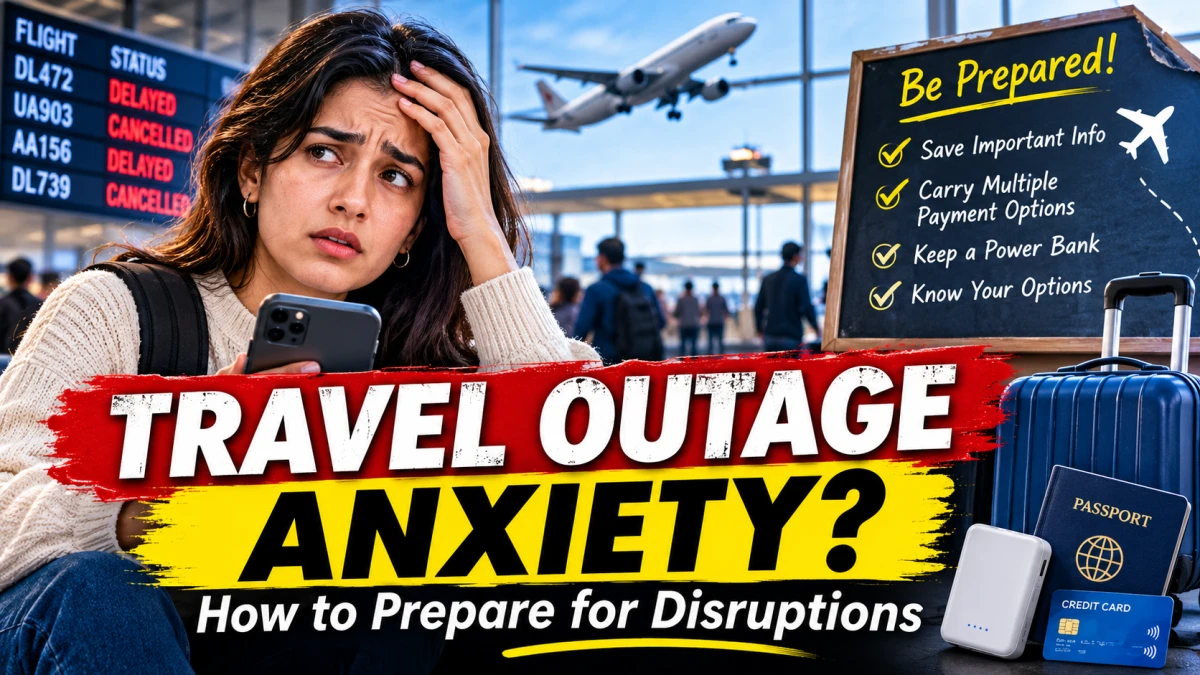
Travel used to begin with a suitcase, a ticket, and a destination. Today, it often begins with a smartphone.
Your boarding pass is on your phone. Your hotel reservation is in an email. Your payment card is connected to a digital wallet. Your navigation app knows the route, and your airline app tells you whether your flight is on time.
It is convenient—until something stops working.
A phone battery dies at the airport. A payment system becomes unavailable. An airline app refuses to load. A flight is delayed, and thousands of travelers begin searching for the same information at once.
Suddenly, a journey that seemed perfectly organized becomes stressful.
With Thanksgiving travel underway in the United States, the growing concern about travel disruptions is raising an important question: Are modern travelers prepared to travel without their digital lifeline?
The answer may be more important than the destination itself.
When Convenience Becomes a Travel Risk
Technology has made traveling easier in countless ways. Travelers can book flights, check into hotels, navigate unfamiliar cities, and communicate with family without carrying a folder full of documents.
But convenience can also create dependence.
Many travelers no longer remember their flight numbers because the airline app stores them. They may not know their hotel address because it is saved in a booking application. Some people rarely carry physical payment cards because their phone handles almost every transaction.
This works well when everything is operating normally.
The problem begins when several systems become unavailable at the same time.
A delayed flight may require a new booking. A payment problem may prevent a traveler from purchasing food or transportation. A low phone battery can make it difficult to access the very information needed to solve the problem.
The inconvenience is not always caused by one major failure. Sometimes it is the combination of small problems that turns a manageable delay into a difficult experience.
Thanksgiving Travel Is a Test of Preparedness
This year's Thanksgiving travel period is expected to remain extremely busy.
According to AAA's 2026 Thanksgiving travel forecast, approximately 81.5 million Americans are expected to travel at least 50 miles from home between November 24 and November 30.
The forecast includes nearly 73 million people traveling by car and approximately 6 million taking domestic flights.
Even though the total is slightly lower than last year, travel volumes remain close to historic highs.
For travelers, that means a delay or disruption may affect more than just their own journey. Crowded airports, busy roads, limited rental cars, and high demand for customer service can make it harder to find an immediate solution.
The recent concerns about travel outages have also reminded people that transportation depends on more than aircraft and roads. It depends on communication systems, payment networks, reservation platforms, and the technology connecting them.
A traveler cannot control every part of that system.
But they can prepare for the moment when one part fails.
The Simple Travel Backup Plan Most People Forget
A backup plan does not need to be complicated. In fact, the best one is often a small collection of information and essentials that remain useful when your phone is unavailable.
Keep a copy of your important travel information
Before leaving home, save your flight confirmation, hotel address, reservation number, and transportation details somewhere accessible offline.
A screenshot can be useful when an app requires an internet connection to display information.
For international travel, keep a secure copy of passport details and relevant visa information. Avoid storing sensitive documents in an unsecured location or sharing them unnecessarily.
The goal is not to carry every document you own. It is to make sure you can answer basic questions even when your phone cannot connect.
Carry more than one way to pay
A digital wallet is convenient, but it should not be your only payment option.
Consider carrying a physical bank card separately from your phone. For longer trips, having access to a second payment method can help if a card is lost, declined, or temporarily unavailable.
Keep a reasonable amount of emergency cash where it is accepted and practical.
A backup payment method may seem unnecessary until you are standing at a service counter with a dead phone and no way to complete a transaction.
Bring a power bank—and charge it before you need it
A portable charger is one of the most useful items in a travel bag.
But a power bank that is itself empty is not much help.
Charge it before departure and keep your charging cable in your carry-on or day bag. If you are flying, check your airline's current rules for carrying power banks and spare batteries.
Do not wait until your phone reaches one percent to start looking for a charging outlet.
Know how to contact your airline without the app
Save your airline's customer service number and booking reference.
If your flight is canceled or significantly delayed, you may need to speak with an airline representative or use the airline's website rather than relying only on the mobile application.
If you are traveling through a large airport, identify the airline's customer service desk when you arrive.
A little preparation can save time when many other passengers are trying to solve the same problem.
What to Do When Your Flight Is Disrupted
Flight delays are frustrating, but panic rarely improves the situation.
Start by checking the official flight information displayed by the airline or airport. If the airline has announced a delay or cancellation, look for the available rebooking options.
If the airline's app is not working, try its website using another connection, such as airport Wi-Fi or mobile data. If digital channels remain unavailable, speak with an airline representative.
Avoid purchasing a completely new ticket before understanding your existing booking and the airline's rebooking options.
Keep receipts for reasonable expenses that may be relevant to a reimbursement or insurance claim. Coverage depends on the airline's policies, the reason for the disruption, the applicable law, and the terms of your travel insurance.
Most importantly, do not assume that every delay means your trip is ruined.
Sometimes the best decision is to wait for reliable information rather than make an expensive change based on rumors or incomplete updates.
Road Trips Need a Backup Plan Too
Travel anxiety is not limited to airports.
A road trip can become difficult when a vehicle battery fails, a tire goes flat, navigation stops working, or a driver discovers that a preferred service station is closed.
AAA reported more than half a million roadside assistance calls during the previous Thanksgiving period, including calls for flat tires, dead batteries, fuel delivery, and towing.
Before a long drive, check your tires, battery, fuel level, and essential vehicle fluids.
Download your route for offline navigation if your mapping application supports it. Keep a phone charging cable in the vehicle, and know how to contact roadside assistance.
It is also wise to check service station and restaurant hours before relying on a particular stop during a holiday.
A road trip becomes much less stressful when you know where you can stop, how you can get help, and what you will do if your original route is no longer practical.
How to Reduce Travel Anxiety Before It Begins
Not every travel problem can be prevented. But uncertainty often feels worse when a traveler has no idea what to do next.
One way to reduce that uncertainty is to make a simple plan before departure.
Know your first option, your backup option, and the point at which you will change plans.
For example, if your flight is delayed, you might decide to wait for an official update before contacting the airline. If your phone battery becomes low, you might switch to battery-saving mode and use your power bank. If a payment system is unavailable, you might use your physical card.
These decisions do not eliminate disruption. They reduce the number of decisions you must make while stressed.
Travelers should also leave some flexibility in their schedules when possible. A tight connection, an important appointment immediately after arrival, or a final available rental car can make a minor delay feel much more serious.
A little extra time can be worth more than a perfectly optimized itinerary.
The Best Travel Essential May Be the One You Never Use
A backup plan is not exciting.
It does not make a destination more beautiful or a flight more comfortable. It may sit untouched in your bag for years.
But that is exactly the point.
The best emergency preparation is often invisible. It gives you confidence without demanding attention. It allows you to enjoy the journey instead of constantly worrying about what might happen.
Modern travel will continue to become more digital. Apps will become smarter, bookings will become easier, and travelers will depend on technology even more.
That is not a reason to abandon convenience.
It is a reason to avoid depending on convenience alone.
A good traveler does not need to expect everything to go wrong. They simply need to be ready when something does.
Because sometimes the most valuable thing you can carry on a trip is not another gadget, another app, or another travel accessory.
It is a backup plan.
Frequently Asked Questions
What's Your Reaction?
 Like
0
 Dislike
0
 Love
0
 Funny
0
 Wow
0
 Sad
0
 Angry
0















Comments (0)