

The Places Between Destinations: Why the Most Memorable Part of Traveling Might Be the Journey Nobody Planned
The most memorable travel experiences do not always happen at famous landmarks. Sometimes they happen between destinations—in a small café, an unfamiliar neighborhood, a local train, or an unexpected conversation. This article explores the hidden beauty of unplanned travel, the value of slowing down, and how travelers can discover a deeper connection with the places they visit.


Imagine planning a trip to Paris.
You research the Eiffel Tower, book tickets to museums, save restaurants on your phone, create a list of famous streets, and organize every day around the places you want to visit.
You finally arrive.
You take photographs, explore the landmarks, try the food, and check off everything on your itinerary.
But years later, when someone asks what you remember most about that trip, something unexpected comes to mind.
Perhaps it was a little bakery you discovered while looking for a train station. Maybe it was a conversation with a shopkeeper, an afternoon spent watching people in a neighborhood square, or a wrong turn that led you into a beautiful street you had never seen in a travel guide.
It was not the attraction you spent weeks planning to visit.
It was something that happened along the way.
This is one of the most interesting contradictions of modern tourism: people spend enormous amounts of time planning destinations, but some of their most meaningful experiences happen outside those plans.
We travel to see famous places, but sometimes it is the ordinary moments surrounding those places that stay with us.
Perhaps the real art of traveling is not simply knowing where to go. It is learning how to appreciate everything that happens between the places we intended to visit.
1. We Plan the Destination but Forget About the Journey
Modern travel planning has become increasingly organized.
Before leaving home, travelers can research hotels, restaurants, attractions, transportation, photography locations, opening hours, and even the best time to stand in front of a particular landmark.
A single smartphone can contain an entire travel itinerary.
This organization is useful. It can save time, reduce uncertainty, and help people avoid unnecessary expenses.
However, there is a potential downside.
When every hour is planned, travel can begin to feel like a checklist.
Wake up. Visit the landmark. Take photographs. Have lunch. Visit another attraction. Return to the hotel. Prepare for tomorrow.
The traveler becomes so focused on reaching the next location that there is little room to experience the surroundings.
Consider the difference between taking a train because it is the fastest way to reach another city and taking the same train because you want to experience the countryside along the route.
The destination may be identical, but the experience can feel completely different.
Travel is not simply a collection of locations. It is also the time spent moving between them.
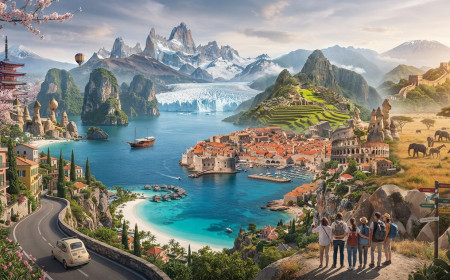
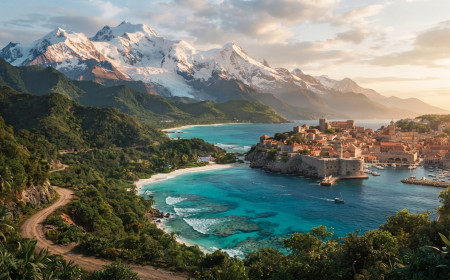
A road winding through mountains, a ferry crossing a quiet lake, or a train passing through unfamiliar towns can become an important part of the journey.
The mistake is not planning a trip. It is assuming that everything outside the plan is wasted time.
2. The Unexpected Moments We Never Put on Our Itineraries
Think about the experiences that make travel stories interesting.
People often remember the unexpected.
A sudden rainstorm that changes the afternoon. A restaurant discovered because the original one was closed. A local festival that was not mentioned in the travel guide. A friendly stranger who recommends a beautiful place nearby.
These moments have something in common: they were not necessarily the reason for the trip.
They became meaningful because they happened unexpectedly.
A 2015 study published in the Asia Pacific Journal of Tourism Research examined travel narratives to understand memorable tourism experiences. Its findings identified several themes associated with memorable trips, including interactions with local people, personally significant experiences, shared moments, novelty, and unexpected discoveries.
This does not mean that every spontaneous moment becomes memorable. It suggests that the value of travel can come from much more than visiting recognizable attractions.
Sometimes the experience we did not search for becomes the story we tell for years.
3. A Small Local Café Can Tell You More Than a Famous Restaurant
Imagine visiting a new country and choosing between two dining experiences.
The first is a famous restaurant with an impressive interior, a long waiting list, and a menu designed for international visitors.
The second is a small neighborhood café where residents stop for breakfast, conversations happen across tables, and the menu reflects everyday local preferences.
Both experiences can be worthwhile.
But the second might introduce you to a different side of the destination.
Food is one of the most accessible ways to understand a place.
Ingredients, cooking techniques, meal schedules, traditional recipes, and dining habits can reveal aspects of local history and everyday life.
A simple breakfast may tell you something about the rhythm of a city. A neighborhood market may reveal which ingredients are important to its cuisine. A family-run restaurant may preserve recipes passed between generations.
Research published in the International Journal of Tourism Research found that local food experiences can contribute to memorable travel experiences and strengthen visitors' connections with destinations.
That connection does not require an expensive meal.
Sometimes it begins with a bowl of soup, freshly baked bread, or a dish you cannot quite pronounce.
4. The Beauty of Getting Lost Without Actually Losing Your Way
There is a difference between being lost and allowing yourself to explore.
Being genuinely lost in an unfamiliar place can create safety concerns, especially when you do not know the local language, transportation system, or neighborhood conditions.
But exploring beyond the main tourist routes can reveal an entirely different experience of a destination.
Instead of following the busiest street, you might walk through a residential neighborhood, visit a small bookstore, explore a public garden, or discover a local craft market.
The objective is not to avoid popular attractions.
It is to understand that a destination is larger than the places advertised to visitors.
A city is not simply its monuments. It is also its streets, parks, public transport, local businesses, architecture, sounds, and everyday routines.
A traveler who spends an entire holiday moving between famous landmarks may see the city without really noticing how it works.
Sometimes the best way to understand a place is to spend an afternoon experiencing its ordinary life.
5. Why Traveling Slowly Can Change the Entire Experience
Travel is often measured by distance and quantity.
How many countries did you visit? How many cities did you explore? How many attractions did you photograph?
But there is another approach: spending more time in fewer places.
This is commonly associated with slow travel.
Slow travel does not necessarily mean moving slowly in a literal sense. It means giving a destination enough time to become more than a background for photographs.
Instead of visiting five cities in seven days, a traveler might spend an entire week exploring one region.
That creates opportunities to understand local routines, revisit places, discover smaller businesses, and experience the destination without constantly checking the clock.
Research published in 2026 in the journal Mobilities examined tourists traveling on a heritage railway through Romania. It found that passengers often enjoyed the slower journey, even when slowing down was not their original reason for choosing the train.
The experience suggests that a slower form of movement can become valuable in itself, rather than being viewed only as a way to reach a destination.
A slower itinerary also has practical benefits.
-
Fewer transportation connections to organize.
-
More opportunities to support local businesses.
-
Less pressure to visit every attraction.
-
More flexibility when plans change.
-
More time to rest and appreciate surroundings.
Travel does not become less valuable simply because fewer places appear on the itinerary.
6. Small Towns Often Reveal the Side of a Country Tourists Miss
Major cities naturally attract attention.
They offer famous museums, shopping districts, historic buildings, restaurants, entertainment, and convenient transportation.
However, smaller towns and rural communities can offer different perspectives.
They may preserve traditional crafts, regional food, historic architecture, local festivals, and ways of life that are less visible in large tourist centers.
A village market can reveal how people buy and sell everyday goods. A traditional workshop can show how a craft is practiced. A community festival can introduce visitors to local music, food, and customs.
This kind of exploration can also create opportunities for local businesses and communities.
UNESCO's work on sustainable cultural tourism emphasizes the importance of involving local communities in tourism development and ensuring that tourism benefits do not remain concentrated in a small number of major attractions.
The goal should not be to turn every quiet community into a tourist destination.
Visitors should respect local routines, privacy, customs, and the wishes of residents.
A place does not need to become famous to be worth discovering.
7. Travel Is Also About the People We Meet Along the Way
A destination can be visually beautiful, but the people we encounter often shape how we remember it.
A taxi driver might recommend a viewpoint that does not appear in a guidebook. A market seller might explain how a local ingredient is traditionally prepared. A tour guide might share a story that changes how you understand a historic building.
These conversations can make a destination feel less distant.
They also remind travelers that they are visiting places where people live, work, raise families, and maintain traditions.
However, meaningful interactions should be approached with respect.
Not every resident wants to become part of a tourist's experience. People should never feel pressured to provide photographs, conversations, or personal access simply because someone is visiting.
A simple greeting, a polite question, or purchasing something from a local business can be enough.
The best travel interactions are not performances arranged for visitors. They are genuine encounters in which both sides feel comfortable.
8. The Social Media Problem: Are We Traveling to Experience Places or to Prove We Were There?
Travel photography has become an important part of modern tourism.
People photograph landmarks, hotels, restaurants, landscapes, meals, and almost every memorable moment.
Sharing travel experiences can inspire others and help people preserve personal memories.
But social media can also influence how travelers choose destinations.
A location may become popular because of a viral photograph or video. Visitors may arrive expecting to recreate the same image they saw online.
They stand in the same location, take the same photograph, and move on.
Sometimes the photograph becomes more important than the experience.
This creates an interesting question:
If you visit a beautiful place but spend the entire time trying to capture the perfect photograph, how much of the place have you actually experienced?
There is nothing wrong with taking pictures. They can be valuable memories.
But consider putting the phone away occasionally.
Watch the sunset without recording it. Listen to the sounds of a busy market. Notice the architecture. Sit beside a lake without checking whether the photograph looks good.
Some experiences are valuable precisely because they do not need to be shared with an audience.
9. How to Discover the Places Between Your Destinations
You do not need to abandon your travel itinerary to experience a different kind of journey.
A few small changes can create more opportunities for unexpected discoveries.
Leave one part of the day unplanned
Rather than scheduling every hour, keep a few hours open.
You might discover a neighborhood, a local café, a public garden, or an event that you would never have included in your original itinerary.
Use local transportation when practical
Trains, buses, ferries, and other forms of public transport can provide a different perspective on a destination.
Choose routes that are safe, accessible, and practical for your circumstances.
Explore neighborhood markets
Local markets can introduce travelers to regional ingredients, everyday products, crafts, and food traditions.
Visit respectfully, ask before photographing people, and support vendors when possible.
Stay longer in one location
Spending more time in one destination can reduce transportation pressure and create opportunities to understand its surroundings.
Ask thoughtful questions
Hotel staff, local guides, shopkeepers, and residents may have useful recommendations.
Ask politely and avoid assuming that everyone has time to help.
Keep a travel journal
Write down small details that photographs may not capture.
A conversation, a smell, a sound, an unfamiliar dish, or a moment of unexpected kindness may become an important memory later.
Be spontaneous without being careless
Unplanned exploration should not mean ignoring safety.
Research transportation, local conditions, weather, entry requirements, and neighborhood guidance. Keep important contact details accessible and maintain a way to return to your accommodation.
Freedom and preparation can exist together.
10. A Different Way to Measure a Successful Trip
Perhaps we need a different way to evaluate travel.
Instead of asking how many countries someone visited, ask what they learned.
Instead of counting attractions, consider the experiences they remember.
Instead of judging a holiday by the number of photographs, think about the moments that changed how someone understands another place.
A successful trip does not necessarily require expensive accommodation, luxury transport, or a long list of famous attractions.
For some travelers, it may be a week in a mountain village. For others, it may be a train journey across a country, a coastal road trip, or an afternoon exploring an unfamiliar neighborhood.
There is no single correct way to travel.
The important thing is to make room for experiences that go beyond simply arriving somewhere and leaving again.
Final Thoughts: Sometimes the Best Part of the Journey Was Never on the Map
We spend a lot of time deciding where to travel.
We compare destinations, study photographs, book accommodation, research attractions, and create itineraries. We want to make sure every part of the journey is worth the money and time we invest.
But perhaps the most meaningful travel experiences are not always the ones we carefully organize.
They might happen while waiting for a train, sharing food with strangers, exploring a quiet street, or discovering a small town we had never heard of before.
The famous landmark may be the reason we purchase the ticket.
The unexpected moments may be the reason we remember the journey.
So, the next time you travel, keep your plans—but leave a little room for something you cannot plan.
Take the road that interests you. Spend an afternoon somewhere without rushing. Try a local dish. Talk to people respectfully. Notice the details around you.
Because travel is not only about reaching the places we dream about.
Sometimes, the most beautiful part of the journey is everything we discover along the way.
Frequently Asked Questions
What's Your Reaction?
 Like
0
 Dislike
0
 Love
0
 Funny
0
 Wow
0
 Sad
0
 Angry
0









Comments (0)