

What If the World Finally Understood Everyone? The Future of Universal Language
Universal language technology could transform how people learn, work, and connect across cultures. But its greatest promise is not making everyone speak the same language. It is creating a world where people can participate globally without abandoning their mother tongue.

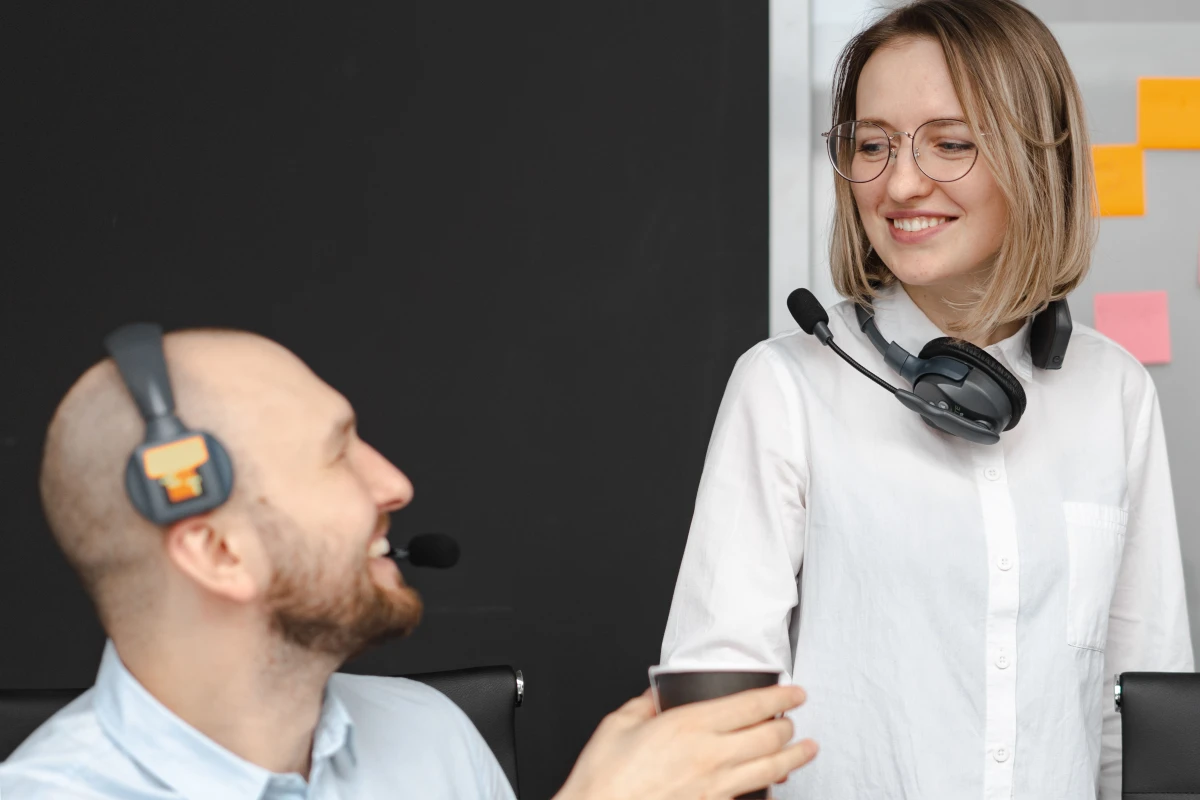
Imagine a young student in a small village in Nepal attending an online lecture from a professor at Harvard. The professor speaks English. The student speaks Nepali. Neither needs to learn the other's language before the conversation begins.
Imagine a doctor explaining a complicated diagnosis to a patient who speaks a completely different language. Or a migrant worker negotiating a fair salary without depending on someone else to interpret their words. Imagine a grandmother telling a story in her own dialect, and a child thousands of miles away understanding every emotion behind it.
This is the promise of universal language technology.
But perhaps we have been looking at it from the wrong perspective.
The real question is not whether technology can translate every language. It is why understanding one another has been such a privilege in the first place.
Language Has Always Been More Than Words
Language is one of humanity's greatest achievements, yet it has also created invisible boundaries.
A person can be intelligent, talented, experienced, and full of extraordinary ideas, but struggle to communicate those ideas simply because they do not speak the language of the room.
An engineer may have a brilliant solution but lack the English necessary to present it to an international audience. A writer may create a beautiful story that never reaches beyond their own linguistic community. A student may understand a subject perfectly but perform poorly because the examination is conducted in an unfamiliar language.
We often mistake language fluency for intelligence.
That is one of the quiet injustices of our global society.
The ability to speak English, Mandarin, Spanish, or another widely used language can open doors that remain closed to equally capable people who speak less globally dominant languages.
Universal translation could begin to change that.
Not by making everyone speak the same language, but by allowing everyone to speak their own.
What If Your Mother Tongue Became Your Greatest Advantage?
For generations, people have been encouraged to abandon their native languages in order to participate in the wider world.
Parents have worried that speaking their mother tongue at home might disadvantage their children. Students have felt embarrassed by their accents. Professionals have spent years trying to sound more like someone from another country.
There is nothing wrong with learning another language. Learning languages opens minds and creates meaningful connections.
But there is something troubling about a world where people feel their original language is not good enough.
Imagine a future where a Nepali researcher can publish findings in Nepali and have them understood by researchers in Germany, Japan, Brazil, and the United States.
Imagine a filmmaker speaking naturally in their local dialect while their film reaches audiences across the world with accurate subtitles, voice translation, and cultural context.
Suddenly, a language spoken by a relatively small community is no longer limited by the size of that community.
The language itself becomes a gateway to the world.
Perhaps the future of globalization will not be about everyone learning a handful of dominant languages. Perhaps it will be about every language becoming globally accessible.
The Most Important Translation May Be Between People, Not Countries
We tend to think of translation as something that happens between different nations.
But some of the biggest communication problems exist within the same country, the same city, and even the same family.
A person from one region may struggle to understand another region's dialect. A deaf person may find that a public service has no sign-language interpreter. An elderly person may be unable to navigate digital services because the language is unfamiliar or unnecessarily complicated.
Universal communication technology could help bridge these gaps.
Real-time speech translation, accurate dialect recognition, and sign-language interpretation could make classrooms, hospitals, workplaces, public services, and digital platforms more accessible.
For people with disabilities, this technology could be more than a convenience. It could create opportunities that were previously unavailable.
However, sign languages deserve special attention.
They are not simply spoken languages converted into hand gestures. They have their own grammar, structure, expressions, and cultural identities. Translating them requires understanding movement, facial expression, space, and context.
A truly universal communication system must recognize that communication does not always begin with speech.
It must be designed for people, not merely for microphones.
But Would We Still Need to Learn Languages?
This is where the conversation becomes interesting.
If technology can translate everything instantly, would learning another language still matter?
The practical answer might change. People may no longer need to spend years learning a language simply to order food, attend a meeting, or complete a basic task in another country.
But the human answer is different.
Learning a language is not only about understanding sentences. It is about understanding how another culture sees the world.
Some expressions cannot be translated perfectly because they carry memories, traditions, humor, or emotions that belong to a particular community.
A translated sentence may tell you what someone said. Learning their language may help you understand why they said it that way.
Technology can remove the pressure to learn a language for survival. It should not remove the joy of learning one for connection.
Perhaps, in a world with universal translation, people will learn languages more freely because they want to, rather than because they have to.
The Danger of Understanding Everything Incorrectly
There is also a serious risk we should not ignore.
A translation system that confidently misunderstands someone could create more problems than a language barrier.
Imagine a translated medical instruction that changes the meaning of a dosage. A legal agreement that loses an important qualification. A diplomatic conversation where a culturally sensitive expression is interpreted as an insult.
Even ordinary conversations can become complicated.
Sarcasm, humor, politeness, hesitation, and emotional tone are not always easy to translate. A phrase that sounds respectful in one culture may sound distant in another. A direct statement may be considered honest in one language and rude in another.
The technology must understand more than vocabulary.
It must recognize uncertainty, preserve the speaker's intention, and admit when it does not understand.
In some situations, the most responsible translation may be to say: "This expression has no exact equivalent. Here is what the speaker likely means."
That kind of honesty could be more valuable than pretending to be perfect.
Who Controls the World's Voice?
There is another question hidden beneath the excitement.
If a handful of technology companies build the systems that translate the world's languages, who decides how those languages are represented?
Which dialects receive attention? Which accents are considered standard? Which expressions are preserved? Which languages are ignored because there is not enough digital data to train a reliable model?
A language does not become unimportant simply because it has fewer speakers or fewer recordings online.
If universal translation is built mainly around commercially valuable languages, it could reproduce the same inequalities it promises to eliminate.
Communities must have a role in building and protecting their own linguistic resources. Their voices should not become raw material controlled entirely by distant companies.
The future of translation should be multilingual, but it should also be fair.
A World Without Language Barriers Is Not a World Without Differences
Perhaps the most beautiful possibility is not that we will all become the same.
It is that we will finally have fewer excuses for excluding one another.
A person should not have to change their accent to be taken seriously. A child should not feel that their mother tongue makes them less capable. A writer should not need to abandon their language to reach an international audience.
And yet, even if every word could be translated perfectly, we would still disagree.
We would still have different beliefs, different histories, different priorities, and different ideas about what makes a good life.
Universal communication will not automatically create peace. Understanding someone does not mean agreeing with them.
But it may make disagreement more honest.
It may help us argue with what someone actually believes rather than what we misunderstood them to say.
And that alone would be a remarkable achievement.
The Future Should Not Have One Language
The greatest achievement of universal translation would not be a world where everyone speaks English, Chinese, or any other single language.
It would be a world where nobody has to surrender their own language to participate in humanity's shared future.
A farmer could explain an invention in their local dialect. A student could ask a question without worrying about grammar. A poet could share a deeply personal story with someone who has never visited their country.
The technology may eventually become so natural that we stop noticing it. Conversations could flow across languages as easily as they do between people who grew up speaking the same one.
But the purpose should remain simple.
Not to erase the differences between us.
To make those differences understandable.
Because perhaps the most advanced civilization is not the one that speaks the same language.
It is the one that finally learns to listen to everyone.
Frequently Asked Questions
What's Your Reaction?
 Like
0
 Dislike
0
 Love
0
 Funny
0
 Wow
0
 Sad
0
 Angry
0














Comments (0)