

The American Dream Needs a Backup Plan: What Students Must Know Before Studying in the USA
Planning to study in the United States? Understand the F-1 student visa process, current immigration policy, financial preparation, visa interviews, legal student employment, CPT, OPT, and what to plan for after graduation.
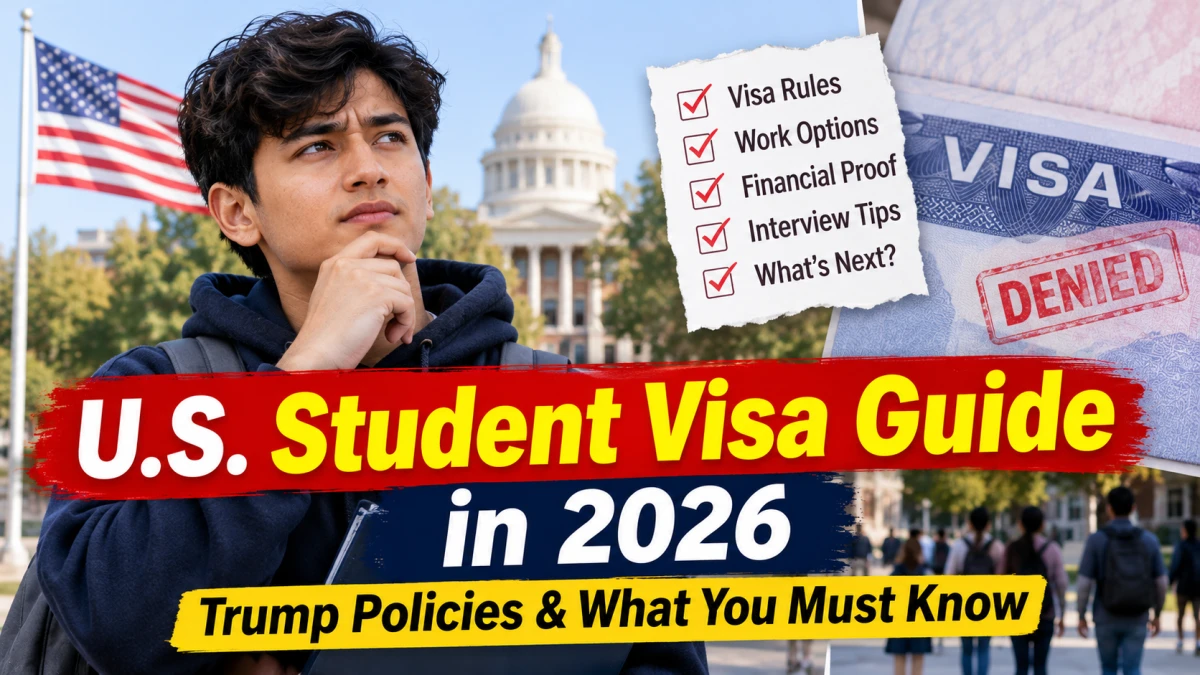
An admission letter can open the door to an American university. But getting a student visa, paying for the degree, finding legal work, and building a future in the United States are four different challenges.
For many students, studying in the United States begins with a simple dream.
A good university. A respected degree. A chance to experience a different country. Perhaps an opportunity to work after graduation and build a career that would have been difficult to pursue at home.
For students in Nepal, the decision can involve years of family savings, education loans, financial sponsorship, and sacrifices made by parents who may never have the opportunity to visit the university their child attends.
But the American student experience is not as simple as receiving an admission letter and boarding a flight.
A university can accept a student while a visa officer refuses the visa. A student can receive a visa but struggle to afford the cost of living. A graduate can earn a valuable degree but face uncertainty about whether an employer will sponsor a work visa.
And a student who expects to work immediately after arriving may discover that immigration rules do not allow the job they had planned to take.
The second Trump administration has brought additional scrutiny and changes to immigration policy, making it even more important for students to understand what they are committing to before they leave home.
The real question is no longer only whether a student can get into an American university.
It is whether they have a realistic plan for everything that comes afterward.
Why Studying in the United States Has Become More Complicated
The United States remains one of the world's most attractive destinations for international education.
Its universities offer a wide range of academic programs, research opportunities, specialised facilities, and connections with major employers.
However, the immigration environment has become more demanding.
The Trump administration has expanded visa screening, increased attention to applicants' online presence, and introduced or pursued policies affecting international students and employment-based immigration.
This does not mean every student will be refused a visa or that studying in America is no longer possible.
It means applicants should expect more scrutiny and should not treat the visa process as a formality after university admission.
The U.S. Department of State states that student visa applicants must establish their eligibility, including their academic preparation, purpose of study, and ability to pay educational, living, and travel costs.
A visa officer is not simply checking whether a university has accepted someone.
The officer is evaluating whether the applicant genuinely intends to study and whether the application is credible.
What Has Changed Under Trump? Understanding the Current Rules
Students should distinguish between changes that have already taken effect, proposals that may change, and rules that have been blocked by courts.
1. More attention to social media and online presence
The U.S. Department of State expanded online presence review for student and exchange visitor visa applicants.
Applicants in F, M, and J categories are subject to social media screening. The department has also instructed applicants in these categories to make their social media profiles public or open for vetting.
This means students should be aware that their online presence may be reviewed as part of the visa process.
Before applying, make sure your online information is truthful and consistent with your application.
Do not misrepresent your education, employment, academic interests, or immigration intentions. Do not create a false online identity to make your application appear stronger.
The safest approach is to be honest and consistent across your application, interview, and public information.
2. The four-year student stay rule was vacated
In July 2026, the Department of Homeland Security finalized a rule that would have replaced the existing duration-of-status system for F-1 and J-1 students with a fixed period of admission, generally limited to four years.
However, a federal court vacated that rule on November 16, 2026.
As of November 24, the previous duration-of-status framework remains in effect unless the court's decision is stayed or reversed.
This is an important example of why students should not rely on old headlines or social media posts for immigration information.
A policy may be announced, finalized, challenged in court, and then blocked. The legal situation can change while students are preparing their applications.
Always check the current rules with your university's international student office and official government sources.
3. The path from graduation to employment has become more competitive
F-1 students may be eligible for Optional Practical Training after completing their studies, but OPT is not the same as permanent employment or a guaranteed work visa.
Students who hope to remain in the United States after graduation may eventually need an employer-sponsored immigration pathway, such as H-1B status.
The Trump administration has introduced changes to the H-1B selection system, including a wage-weighted selection process that gives more weight to higher-paid positions.
This makes it especially important for students to choose a degree that can lead to meaningful employment and develop skills that employers genuinely need.
A student should not choose a university solely because someone claims that it will make getting an H-1B visa easy.
No university can guarantee that outcome.
The First Mistake: Choosing a Course Because Someone Promised a Job
One of the most expensive mistakes students make is selecting a course without understanding what it actually leads to.
A consultant may recommend a particular program because it is popular. A friend may suggest a university because graduates supposedly find jobs quickly. A social media influencer may claim that one degree provides an easy route to permanent residence.
But the right course depends on the student's academic background, interests, financial situation, and career goals.
Before choosing a program, ask yourself:
-
Does this degree make sense with my previous education?
-
What skills will I gain?
-
What types of jobs can graduates realistically pursue?
-
Is the program connected to my long-term career plans?
-
Can I afford the degree without depending on uncertain employment?
-
Does the university have appropriate accreditation and student support?
For students interested in technology, business, healthcare, engineering, or other professional fields, the degree should be selected based on its actual value—not simply because someone says it is a popular route to the United States.
A course that does not fit your academic history or career goals can also make it harder to explain your study plans during the visa interview.
The strongest application is one where the student can clearly explain why the program is the logical next step in their education.
The Financial Reality: Can Your Family Afford the Entire Plan?
This is where students and families need to be particularly careful.
The cost of studying in the United States can include tuition, housing, food, health insurance, transportation, books, university fees, visa costs, and other expenses.
The amount shown on the Form I-20 is an important starting point, but families should also consider expenses that may arise during the student's actual stay.
A student should not assume that part-time work will cover the difference.
Even if a student is legally allowed to work, finding a job is not guaranteed. The number of available positions may depend on the university, location, academic schedule, and local employment conditions.
Before committing to a university, calculate the full cost of the program.
For example, a student should understand:
-
The estimated cost for the first academic year
-
The expected cost of the entire degree
-
How much money is available immediately
-
Whether financial support will continue in later years
-
Whether the family can manage unexpected expenses
-
What happens if the student cannot find a job
A financial plan should still work if the student earns nothing from employment during the first year.
That is a much safer approach than arriving in America with only enough money for the first few months.
Financial Documents: What Students Should Prepare
A financial statement is not just a bank balance printed on paper.
The student should be able to explain where the money comes from, who is paying for the education, and whether the funds are genuinely available.
Depending on the student's circumstances, useful documents may include:
-
Recent bank statements
-
Education loan approval letters
-
Scholarship or financial aid letters
-
Sponsor's income and employment documents
-
Tax records or business income evidence, where applicable
-
Documents showing the relationship between the student and sponsor
-
A realistic explanation of how future education costs will be covered
If parents are sponsoring the student, they should understand the financial commitment and be prepared to explain it.
If the family owns a business, the student should be able to describe the business and the source of its income honestly.
If an education loan is involved, understand the repayment terms and what happens if the student does not obtain employment after graduation.
Avoid temporary deposits, borrowed money presented as permanent savings, or fabricated financial documents.
A large bank balance does not automatically make an application convincing if the source of funds cannot be explained.
The purpose of financial preparation is to demonstrate a genuine and sustainable plan—not simply to produce an impressive number.
The Visa Interview: Be Prepared, Not Memorised
The student visa interview can be stressful, especially for applicants who have invested significant money and time in the process.
But the best preparation is not memorising a script.
It is understanding your own application.
A visa officer may ask:
-
Why did you choose this university?
-
Why did you select this course?
-
How does the program relate to your previous education?
-
Who is paying for your studies?
-
What does your sponsor do?
-
Why are you not studying the same course in your home country?
-
What are your plans after graduation?
There is no single perfect answer to these questions.
A student should answer truthfully, clearly, and directly.
If you selected a university because of its curriculum, explain what makes the curriculum appropriate for your goals.
If your parents are paying, explain their occupation and how they will support the education.
If you intend to return home after your studies, explain how the degree will help you pursue your career there.
Do not invent a career plan simply because you think it sounds impressive.
A genuine explanation is more valuable than a polished answer that does not match your background.
Can F-1 Students Work in the United States?
Yes, but there are important restrictions.
An F-1 student visa does not give unrestricted permission to work anywhere in the United States.
Students must understand the difference between on-campus employment, Curricular Practical Training, Optional Practical Training, and other limited forms of work authorization.
On-campus employment
Eligible F-1 students may generally work on campus while maintaining their student status.
During the academic term, on-campus work is usually limited to 20 hours per week. Students may generally work full-time during official school breaks when eligible.
However, a campus job is not guaranteed.
A university may have limited openings, and the availability of work can depend on the student's department, skills, schedule, and local conditions.
Students should not assume that they will immediately find a job after arriving.
Curricular Practical Training (CPT)
CPT allows eligible F-1 students to participate in practical training that is directly related to their major and an integral part of their established curriculum.
It may include internships, cooperative education, or required practical experiences.
The student's Designated School Official (DSO) must authorize CPT in the Student and Exchange Visitor Information System and endorse the student's Form I-20.
Students must receive the required authorization before beginning the work.
CPT is not a general permission to take any off-campus job.
Also, one year or more of full-time CPT can eliminate eligibility for post-completion OPT at the same educational level.
Optional Practical Training (OPT)
OPT allows eligible F-1 students to work in a job directly related to their major area of study.
Eligible students may generally receive up to 12 months of OPT at each educational level.
Students must follow the application process and obtain the required employment authorization before beginning work.
A student should not assume that graduating automatically gives them permission to work.
The timing of the application, the program completion date, and the Employment Authorization Document (EAD) are important.
STEM OPT extension
Some students who complete eligible science, technology, engineering, or mathematics degrees may qualify for an additional 24-month STEM OPT extension.
Eligibility depends on the degree, employer, training plan, and other requirements.
Students should verify that their degree's classification is included on the official STEM Designated Degree Program List.
A program title that sounds technical does not automatically qualify.
What Students Must Do Before Starting a Job
Before accepting employment, an F-1 student should:
-
Speak with the university's international student office or DSO.
-
Confirm that the job is permitted under the student's immigration category.
-
Obtain CPT authorization or the required OPT employment authorization, if applicable.
-
Check the dates and conditions on the Form I-20 and EAD.
-
Confirm the number of hours permitted during the academic term.
-
Keep copies of employment documents and authorization records.
Do not begin off-campus work simply because an employer says it is acceptable.
Do not assume that cash payment, freelance work, remote work, or a job offered by a friend is automatically exempt from immigration rules.
Unauthorized employment can put a student's immigration status at risk.
When in doubt, ask the DSO before accepting the job.
What Happens After Graduation?
Many students hope to remain in the United States after completing their degree.
Some may obtain OPT and gain professional experience. Others may eventually find an employer willing to sponsor them for a work visa.
But the transition is not guaranteed.
The H-1B process is competitive, and eligibility depends on the job, employer, degree, wage requirements, and immigration rules in effect at the time.
Students should also understand that an employer's willingness to hire them does not automatically mean the employer can sponsor them.
The best strategy is to focus on developing strong professional skills, building relevant experience, maintaining legal status, and understanding the available immigration options.
A student should have a backup plan if they cannot remain in the United States after graduation.
That plan might involve returning home, pursuing employment in another country, or continuing education through a legitimate academic pathway.
Returning home with a valuable degree and professional experience is not a failure.
The purpose of education should be to improve a person's future—not to make their entire success dependent on one immigration decision.
The Most Important Question: What If Things Do Not Go as Planned?
Students often prepare for the best possible outcome.
They imagine receiving the visa, finding a job, graduating on time, and obtaining a work opportunity.
But responsible planning also requires considering what could go wrong.
What if the visa is refused?
What if the student cannot find employment?
What if tuition increases?
What if a family emergency requires the student to return home?
What if the student graduates but cannot obtain the work authorization they expected?
These are difficult questions, but they should be discussed before the family makes a major financial commitment.
A backup plan does not mean a student lacks confidence.
It means they understand the risks and are prepared to make responsible decisions.
The American Dream Is Still Possible—but It Requires More Than Hope
Studying in the United States can be a life-changing experience.
It can provide access to education, research, professional networks, and opportunities that may not be available elsewhere.
But students should not confuse possibility with certainty.
An admission letter is not a visa. A visa is not a job. A job is not permanent immigration status.
Each stage requires preparation, documentation, and decisions that may be outside the student's control.
The students who are best prepared are not necessarily those who have the most money or the most impressive university offer.
They are the ones who understand their academic goals, know how they will pay for their education, respect immigration rules, and have a realistic plan for the future.
Before leaving home, ask yourself one final question:
If I cannot work in America, cannot stay after graduation, or need to return home earlier than expected, will this education still be worth it?
If the answer is yes, you may be making a decision based on education and long-term value rather than an uncertain promise.
And that is a much stronger foundation for the American dream.
Frequently Asked Questions
What's Your Reaction?
 Like
0
 Dislike
0
 Love
0
 Funny
0
 Wow
0
 Sad
0
 Angry
0










Comments (0)