

How Artificial Intelligence Is Changing the Way We Work, Learn, and Live
Artificial intelligence is reshaping how people work, learn, communicate, and use technology.

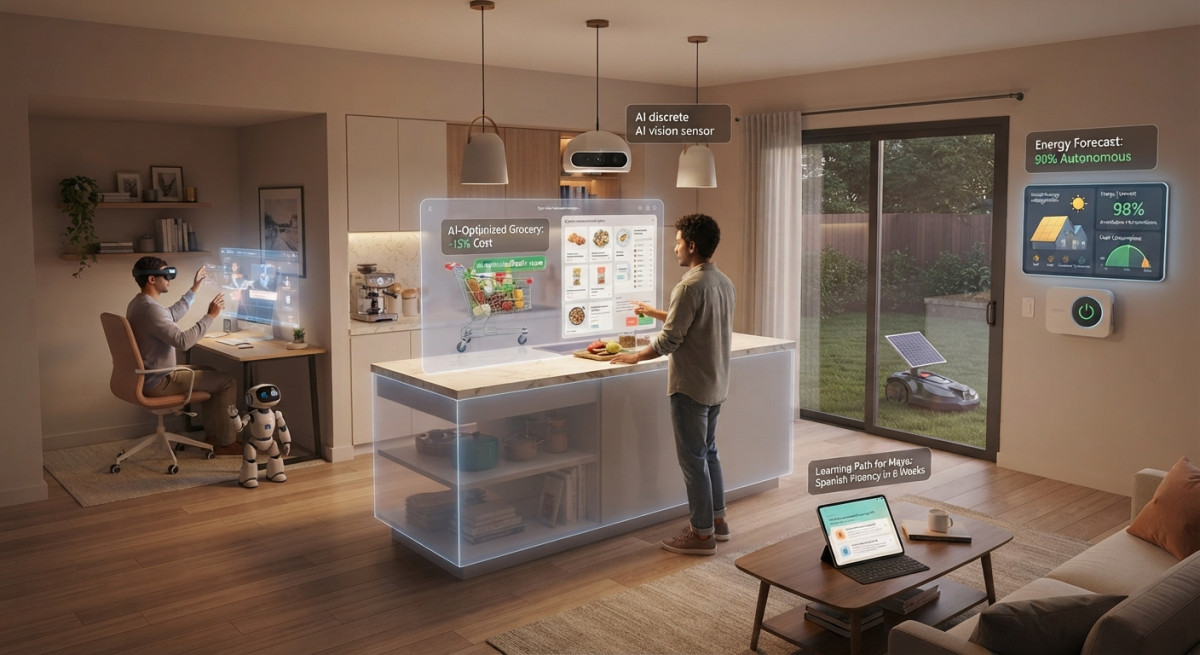
How Artificial Intelligence Is Changing the Way We Work, Learn, and Live
Artificial intelligence (AI) is rapidly becoming part of everyday life. From virtual assistants and personalized recommendations to business automation and educational tools, AI is changing how people communicate, make decisions, access information, and complete daily tasks.
What once seemed like technology from science fiction is now being used in homes, schools, offices, hospitals, transportation systems, and businesses around the world.
Artificial intelligence is not simply another technological trend. It represents a major shift in how information is processed, how services are delivered, and how people interact with digital systems.
As AI technology continues to develop, understanding its benefits, limitations, and potential risks is becoming increasingly important. Whether you are a student, business owner, employee, or technology enthusiast, AI is likely to influence some part of your professional or personal life.
In this article, we explore how artificial intelligence is changing the modern world, the industries experiencing its impact, and what individuals should understand about its future.
What Is Artificial Intelligence?
Artificial intelligence refers to computer systems designed to perform tasks that traditionally require human intelligence. These tasks can include recognizing patterns, understanding language, analyzing information, generating content, making predictions, and supporting decisions.
AI systems use different technologies, including machine learning, natural language processing, computer vision, and deep learning.
One increasingly visible area is generative AI. These systems can create new content, such as written responses, images, computer code, audio, and other digital materials based on instructions and information provided by users.
For example, someone can use an AI assistant to summarize a long document, generate ideas for a presentation, explain a difficult subject, or help organize a project.
However, AI does not think or understand the world in exactly the same way humans do. Its outputs can contain mistakes, outdated information, or misleading statements. Human judgment remains important when using AI-generated information.
1. Artificial Intelligence Is Transforming the Workplace
One of the most significant effects of AI is the way it is changing professional environments.
Businesses increasingly use AI-powered systems to automate repetitive tasks, organize information, analyze data, support customer service, and improve productivity.
For example, employees can use AI tools to summarize meetings, prepare initial reports, organize schedules, draft communications, and analyze large amounts of information.
In marketing, AI can assist with audience research, content planning, customer insights, and campaign analysis. In finance, it can help identify unusual transaction patterns and support data analysis. In manufacturing, AI-powered systems can monitor equipment and help identify potential maintenance issues.
The OECD's 2026 research on digital technology adoption reports that 20.2% of firms across OECD countries used AI in 2025, compared with 14.2% in 2024. This demonstrates how AI adoption is expanding across businesses.
AI does not necessarily eliminate the need for employees. In many workplaces, it changes the tasks people perform and allows workers to concentrate more on responsibilities that require communication, creativity, problem-solving, and professional judgment.
The challenge for businesses is learning how to integrate these systems responsibly while supporting employees through technological changes.
2. AI Is Changing the Way Students Learn
Education is another area experiencing significant technological change.
Students can use AI-powered learning tools to explain complicated topics, practice languages, organize study schedules, generate revision questions, and receive feedback on their work.
For example, a student struggling with mathematics can ask an AI tutor to explain a concept through simpler examples. Someone learning a foreign language can practice conversations and improve vocabulary.
Teachers can also use AI to develop lesson plans, create practice materials, organize educational resources, and support different learning needs.
However, using AI in education requires care.
If students depend on AI to complete every assignment, they may miss opportunities to develop independent thinking, research abilities, and problem-solving skills.
The OECD's Digital Education Outlook 2026 highlights both the potential and limitations of generative AI in education. AI can support personalized learning and feedback, but completing tasks with AI does not automatically mean students have learned the underlying material.
The most effective approach is to use AI as a learning assistant rather than a replacement for studying, practicing, and understanding.
3. Healthcare Is Exploring New Uses for AI
Artificial intelligence is creating new possibilities in healthcare by helping medical professionals work with complex information.
AI systems can assist with medical image analysis, research, patient information management, administrative processes, and the identification of patterns in health data.
For example, specialized AI systems can help trained professionals examine medical images and identify areas that may require closer attention.
AI can also support medical research by helping researchers analyze large datasets and explore possible patterns that would otherwise take considerable time to examine.
However, healthcare is a high-stakes field. AI-generated information should not replace qualified medical professionals, clinical evaluation, or appropriate medical treatment.
Privacy, accuracy, fairness, and accountability are particularly important when AI systems process personal medical information.
The future of AI in healthcare will depend not only on technological development but also on responsible implementation and appropriate human oversight.
4. Businesses Are Becoming More Data-Driven
Modern businesses generate enormous amounts of information through websites, customer interactions, sales, digital advertising, and online services.
AI can help organizations analyze this information and identify patterns that support better business decisions.
Retail companies may use AI to understand customer preferences and forecast demand. Online businesses can use recommendation systems to suggest products or services based on customer activity.
Small businesses can also benefit from accessible AI tools.
For example, an entrepreneur may use AI to organize customer inquiries, prepare marketing ideas, draft product descriptions, or analyze business performance.
These tools can reduce the time spent on repetitive administrative work and allow business owners to focus on customers, products, and growth.
Nevertheless, AI is not a substitute for a strong business strategy. Poor-quality data, incorrect assumptions, and excessive reliance on automated recommendations can lead to bad decisions.
Businesses need to evaluate whether an AI tool actually improves their operations before adopting it.
5. AI Is Changing Customer Service and Communication
Many organizations now use AI-powered chatbots and virtual assistants to communicate with customers.
These systems can answer common questions, provide information about products, help users navigate websites, and direct inquiries to the appropriate department.
For customers, this can mean faster access to basic information without waiting for a human representative.
AI translation tools are also helping people communicate across language barriers. They can translate messages, documents, and conversations, making international communication more accessible.
However, automated systems do not always understand context, emotions, or unusual situations correctly.
For complicated complaints, sensitive discussions, and important decisions, human customer support remains valuable.
The most effective customer service systems combine the speed of automation with the understanding and judgment of human employees.
6. Transportation and Smart Cities Are Becoming More Intelligent
Artificial intelligence is also influencing how people and goods move.
Transportation companies use AI-supported systems for route planning, traffic analysis, logistics, and fleet management.
Navigation applications can analyze traffic information and suggest alternative routes. Delivery companies can use predictive systems to organize transportation and improve scheduling.
In cities, AI can support traffic management, energy monitoring, public transportation planning, and other infrastructure services.
Autonomous vehicle technology is another important area of development. Self-driving systems use cameras, sensors, and AI models to interpret their surroundings and make driving-related decisions.
Although these technologies have advanced, fully autonomous transportation still faces technical, legal, and safety challenges.
AI-powered transportation could make some services more efficient, but reliable infrastructure, safety testing, and public trust will remain essential.
7. Creativity and Content Production Are Evolving
AI is changing how people create digital content.
Writers, designers, photographers, marketers, musicians, and video creators can use AI tools to support different stages of creative work.
For example, writers can generate topic ideas or organize outlines. Designers can explore visual concepts. Video creators can use automated editing features, captions, and transcription tools.
These technologies can make certain creative processes faster and more accessible, particularly for individuals and small businesses with limited resources.
However, generating content is not the same as producing meaningful creative work.
Human experiences, original ideas, cultural understanding, storytelling, and personal perspectives continue to influence the quality of creative output.
Creators also need to consider copyright, ownership, consent, accuracy, and disclosure when using AI-generated materials.
AI may change creative industries, but human creativity remains an important part of producing work that connects with audiences.
8. Artificial Intelligence Is Changing the Skills People Need
As AI becomes more common, the skills required in many professional fields are evolving.
Employees may increasingly need to understand how to use digital tools, interpret information, evaluate AI-generated outputs, and solve problems with technology.
However, not everyone needs to become an AI engineer or software developer.
Many workers can benefit from practical AI literacy, basic data skills, communication, critical thinking, adaptability, and the ability to work with digital systems.
The International Labour Organization's 2026 research on skills in the age of AI emphasizes growing demand for digital, cognitive, and socio-emotional capabilities, alongside adaptability and AI literacy.
Some valuable skills to develop include:
-
AI literacy: Understanding what AI can and cannot do.
-
Critical thinking: Evaluating information rather than accepting every generated answer.
-
Digital communication: Working effectively with online platforms and digital tools.
-
Data interpretation: Understanding information and recognizing patterns.
-
Problem-solving: Applying knowledge to practical situations.
-
Creativity: Developing original ideas and approaches.
-
Adaptability: Learning new technologies as workplaces evolve.
People who combine technical awareness with strong human skills may be better prepared for changing professional environments.
9. The Growing Importance of Data Privacy and Cybersecurity
While AI creates opportunities, it also introduces important privacy and security concerns.
AI applications may process personal information, business documents, financial details, photographs, and other sensitive data.
If users share confidential information with an AI platform without understanding its data policies, they may expose information unnecessarily.
AI can also be misused to create convincing fake images, videos, voices, messages, and impersonation attempts.
Businesses and individuals should therefore take cybersecurity seriously.
Some practical precautions include:
-
Avoid entering passwords or sensitive financial information into untrusted AI tools.
-
Review privacy policies before sharing personal or business information.
-
Use strong passwords and multifactor authentication.
-
Verify suspicious messages and unexpected requests.
-
Check the authenticity of important images, recordings, and documents.
-
Keep devices, applications, and security software updated.
Responsible AI adoption requires more than knowing how to use technology. It also requires understanding how to protect information and recognize potential misuse.
10. What Does the Future of Artificial Intelligence Look Like?
Artificial intelligence is likely to become increasingly integrated into digital services, workplaces, educational platforms, healthcare systems, and everyday devices.
Future developments may bring more capable personal assistants, improved translation systems, advanced research tools, smarter business software, and more personalized digital experiences.
However, the future of AI will not be determined by technology alone.
Education, regulation, data protection, accessibility, infrastructure, and public trust will all influence how these systems are adopted.
There are also important questions about employment, inequality, copyright, misinformation, and the concentration of technological power.
The OECD's 2026 research suggests that AI can improve productivity and create new opportunities, but its effects differ across industries, occupations, and skill levels.
This means individuals, educational institutions, businesses, and governments will need to prepare for technological changes rather than assume that every industry will experience the same benefits.
How to Start Using Artificial Intelligence in Everyday Life
You do not need advanced technical knowledge to begin exploring AI.
A practical starting point is to identify a task that takes time and determine whether an AI tool can help you complete it more efficiently.
Here are a few examples:
-
For students: Use AI to explain difficult concepts, create practice questions, and organize study schedules.
-
For professionals: Use AI to summarize documents, organize information, and prepare initial drafts.
-
For business owners: Explore AI tools for customer support, marketing research, and administrative tasks.
-
For content creators: Use AI to brainstorm ideas, develop outlines, and assist with editing.
-
For everyday users: Explore translation, planning, research, and productivity applications.
Start with simple tasks, review the results carefully, and avoid sharing sensitive information.
The goal should be to use AI to improve your abilities, not to depend on it for every decision.
Final Thoughts
Artificial intelligence is changing the way people work, learn, communicate, and interact with technology. From supporting education and business operations to assisting research and improving digital services, its influence continues to expand.
At the same time, AI brings challenges involving privacy, security, employment, accuracy, and responsible use.
The most important skill in this changing environment may not be knowing how to use every new AI application. It may be understanding when to use technology, how to evaluate its results, and where human judgment remains essential.
Artificial intelligence is a powerful tool, but its value ultimately depends on how people choose to use it.
The future will belong not simply to those who adopt new technology, but to those who learn to use it thoughtfully, responsibly, and creatively.
Frequently Asked Questions
What's Your Reaction?
 Like
0
 Dislike
0
 Love
0
 Funny
0
 Wow
0
 Sad
0
 Angry
0













Comments (0)