

When the CEO Becomes the Brand: Can One Person's Misconduct Put a Company's Future at Risk?
When a CEO becomes the face of a company, personal controversy can quickly become a corporate crisis. Nvidia's leadership turmoil raises a bigger question about brand identity, accountability, and whether a business can survive when its most recognizable figure becomes its greatest risk.

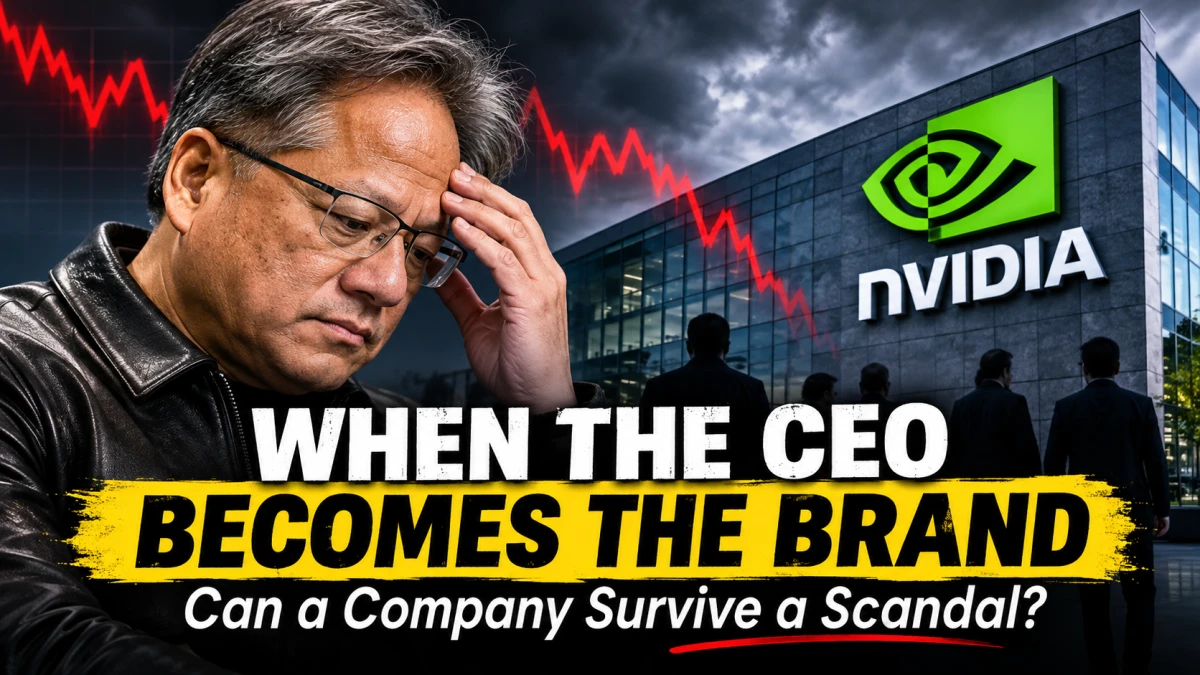
A company's reputation is built over years, but when its leader becomes its public identity, one personal crisis can put everything at stake.
A company can spend decades building trust, developing technology, winning customers, and creating a recognizable brand. Yet sometimes, the person standing at the center of that success becomes the biggest uncertainty facing the business.
That is the uncomfortable question emerging from the recent Nvidia leadership controversy.
Jensen Huang is not simply the chief executive of Nvidia. For many people, he is Nvidia. His black leather jacket, keynote presentations, ambitious vision for artificial intelligence, and confident leadership style have become closely associated with the company's identity.
But what happens when the face of a company becomes involved in a personal scandal?
Can a business separate its future from the reputation of the person who helped build it?
When a Leader Becomes More Than a CEO
In the modern business world, some executives have become celebrities in their own right.
People recognize their faces before they recognize the company's products. Their speeches become headlines, their opinions influence markets, and their personalities shape how customers perceive the brand.
Jensen Huang represents this phenomenon particularly well.
Nvidia's rise has made him one of the most recognizable figures in the global technology industry. His public image has become closely connected to the company's success in artificial intelligence.
This kind of recognition can be extremely valuable. A trusted leader can attract investors, motivate employees, build partnerships, and make a complicated technology company easier for the public to understand.
However, there is another side to this relationship.
When the CEO becomes the brand, the company's reputation may become dependent on one person's behavior.
A leadership problem can quickly turn into a branding problem. A personal controversy can become an investor concern. And a question about an individual's judgment can eventually become a question about the company's culture.
The company may have thousands of talented employees, but the public often sees only the person at the top.
Nvidia's Leadership Crisis Is a Warning About Corporate Reputation
Nvidia's recent situation illustrates how quickly a leadership controversy can become a company-wide issue.
Jensen Huang resigned as Nvidia's CEO on November 12, 2026, following reports about personal relationships and concerns surrounding an alleged foreign intelligence connection. He was reinstated by Nvidia's board on November 23.
The company has said that an independent investigation into the reported foreign intelligence effort will continue. The allegations should not be treated as proven findings, and the investigation remains an important part of the story.
Nevertheless, the episode has placed Nvidia under intense public scrutiny.
The issue is no longer limited to Huang's personal life. It has raised broader questions about corporate governance, executive accountability, national security, and the risks of depending heavily on a single leader.
When a company's most recognizable figure becomes the subject of controversy, every decision made by that person can attract additional attention.
Even a decision to bring the leader back can become a major public debate.
The Hidden Risk of Building a Brand Around One Person
There is a business lesson here that extends far beyond Nvidia.
A company can benefit enormously from a powerful founder or CEO persona. But if the brand becomes too closely connected to one individual, the organization may become vulnerable to events it cannot easily control.
Consider what happens when a well-known executive faces a serious controversy.
Customers may question whether the company's values are genuine. Employees may wonder whether leadership standards are applied consistently. Investors may become concerned about management stability. Business partners may reconsider the risks of their association.
Not every controversy leads to lost customers or declining revenue. In some cases, a company's products and financial performance remain strong.
But reputation is an asset that can be damaged long before the damage appears in financial statements.
The most dangerous situation is when a company has built such a strong connection between its brand and its leader that it struggles to imagine a future without that person.
That is not necessarily a sign of strength.
It may be a sign that the company has failed to develop an identity independent of its leadership.
Can a Company's Success Protect Its CEO?
One of the most interesting questions in the Nvidia controversy is whether exceptional business success can influence how a company responds to personal misconduct.
Huang has played an extraordinary role in Nvidia's growth. His knowledge of the technology industry, relationships with major customers, and influence across the AI ecosystem make him difficult to replace.
That creates a complicated situation for a board of directors.
Removing a highly successful CEO may create uncertainty. Keeping that CEO may create reputational or governance risks.
The board must consider both sides without allowing financial success to become an excuse for ignoring accountability.
A company should not have to choose between protecting its business and protecting its standards.
If an organization depends entirely on one individual, the board has a responsibility to ask why succession planning and leadership development have not created more stability.
The question should not simply be whether the CEO is valuable.
It should also be whether the company is strong enough to survive without him.
The Difference Between a Powerful Persona and a Strong Brand
A powerful executive persona can help a company stand out. But a strong brand should represent more than one person's personality.
It should reflect the company's products, employees, culture, values, customer relationships, and long-term purpose.
When those elements are strong, a company has a better chance of maintaining public confidence during a leadership crisis.
When they are weak, the organization may find itself defending the reputation of one individual instead of demonstrating the strength of the business itself.
This is why corporate identity matters.
A CEO can be the face of a company without becoming the entire company.
The distinction may seem small, but it can determine how an organization responds when its most visible leader makes a serious mistake.
A Company's Future Should Never Depend on One Person's Reputation
Nvidia's story is still developing, and its long-term business performance will depend on many factors beyond this controversy.
The company remains a major force in artificial intelligence, and its technology, employees, customers, and global partnerships are not defined by one individual alone.
However, the leadership crisis offers an important lesson for businesses of every size.
A founder's personality may attract attention. A CEO's reputation may strengthen a brand. A recognizable face may help a company become famous.
But the company must ultimately stand for something bigger than the person leading it.
Because when the face of a company becomes its greatest liability, the real question is not simply whether that person can return.
The real question is whether the company has built a future strong enough to stand on its own.
A leader can build a company, but a company's future should never depend entirely on the reputation of its leader.
Frequently Asked Questions
What's Your Reaction?
 Like
0
 Dislike
0
 Love
0
 Funny
0
 Wow
0
 Sad
0
 Angry
0















Comments (0)