

What Happens When the Internet Becomes Too Expensive to Maintain?
The internet may feel like an endless, always-available resource, but behind every website, video, and online service is an expensive infrastructure. As energy demand, data center investment, and maintenance costs grow, could keeping the internet accessible become one of the defining challenges of the digital age?
Imagine waking up one morning and discovering that your favorite online services have become more expensive. Your internet subscription costs more, some websites load more slowly, and services you once used for free now require payment. Perhaps remote communities begin experiencing more frequent outages because maintaining their networks is becoming financially difficult.
This might sound like the beginning of a science-fiction story, but the economic questions behind it are real.
The internet is often treated as something that simply exists. We connect our phones, open websites, stream videos, attend online meetings, and expect everything to work. What we rarely consider is the enormous physical system operating behind those ordinary activities.
Every online interaction depends on infrastructure that requires electricity, equipment, skilled workers, repairs, investment, and continuous maintenance.
As the world becomes increasingly dependent on digital services, an important question deserves more attention: What happens if maintaining the internet becomes more expensive than the systems supporting it can comfortably afford?
The internet is unlikely to suddenly disappear because of rising costs. A more realistic concern is that maintaining, expanding, and accessing reliable internet services could become increasingly difficult in certain places and for certain communities.
The internet is not as invisible as it seems
When people think about the internet, they usually imagine websites, applications, social media platforms, and cloud services. However, these are only the visible parts of a much larger system.
The internet depends on physical infrastructure spread across the planet.
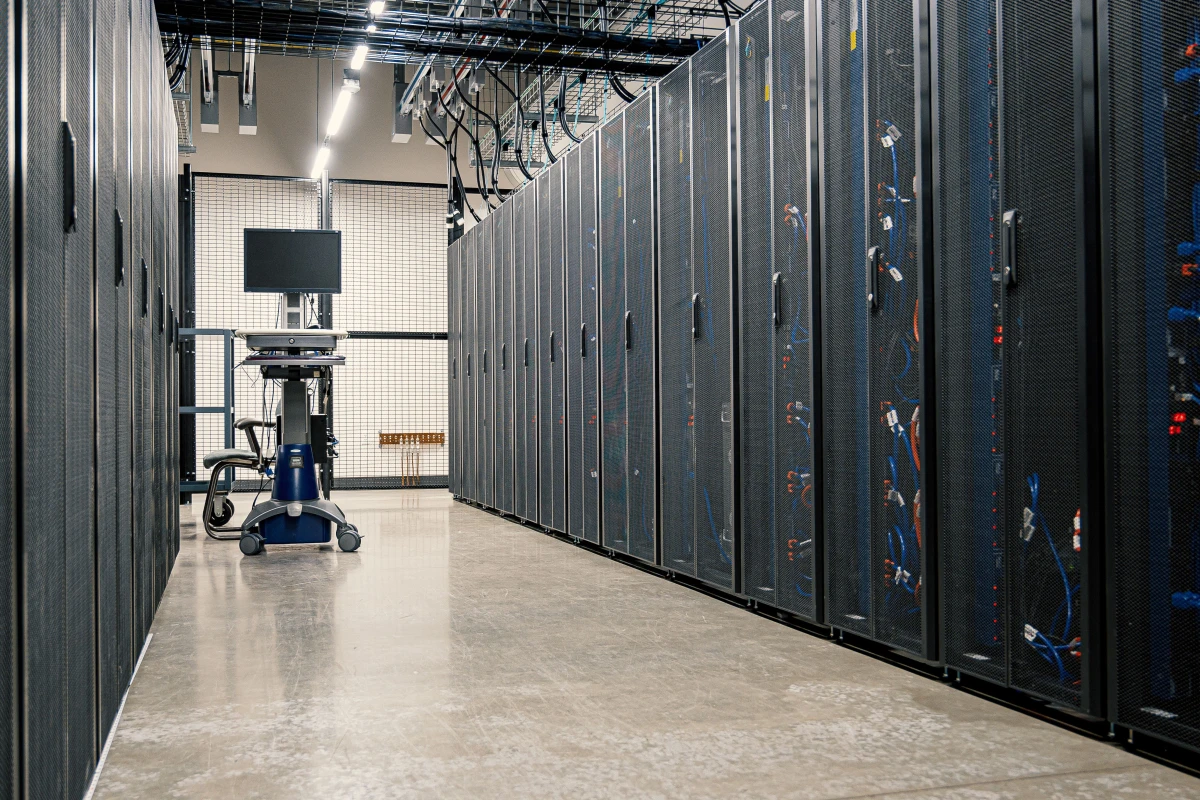
Data centers store and process enormous amounts of information. Undersea fiber-optic cables connect continents. Terrestrial fiber networks carry information between cities and communities. Mobile towers provide wireless connectivity, while routers, switches, backup power systems, and other equipment keep networks operating.
All of this requires regular investment.
A damaged submarine cable needs specialized repair vessels and technical crews. A data center needs electricity, cooling systems, replacement hardware, and security. A telecommunications provider must maintain towers, upgrade equipment, pay employees, and expand coverage as demand grows.
Unlike a digital file that can be copied almost instantly, the infrastructure carrying that file cannot be maintained without physical resources.
The internet may feel weightless, but keeping it operational is a very physical and expensive responsibility.
Why maintaining the internet could become more expensive
Several pressures are developing simultaneously. They do not mean that the internet is becoming financially unsustainable everywhere, but they demonstrate why its long-term operating costs deserve attention.
1. Data centers are consuming more electricity
One of the biggest changes in the digital economy is the growing demand for computing power.
Every time someone streams a movie, backs up photographs, uses cloud software, or interacts with an artificial intelligence system, computing resources are required somewhere.
Those resources operate inside data centers, which need electricity not only to run servers but also to power cooling, networking, and supporting equipment.
According to the International Energy Agency (IEA), data centers consumed approximately 415 terawatt-hours of electricity in 2024, representing around 1.5% of global electricity consumption.
The IEA's 2025 outlook projected that this figure could more than double to approximately 945 TWh by 2030.
Artificial intelligence is an important contributor to this growth, alongside other digital services.
This creates a complicated situation. Technology companies want more computing capacity because demand for digital services is increasing. However, building and operating that capacity requires additional electricity, infrastructure, and investment.
In regions where electricity supplies and grid connections are already under pressure, expanding data centers can become more complicated and expensive.
The question is no longer simply how much computing power we can build. It is also how affordably and sustainably we can power it.
2. The physical internet needs constant repairs
Most people never think about the cables carrying their internet traffic across oceans.
Yet submarine fiber-optic cables are essential to international connectivity. They connect countries and continents, carrying enormous volumes of information every second.
These cables are exposed to physical risks, including underwater landslides, earthquakes, fishing activities, and accidental damage from ships and anchors.
When a major cable is damaged, specialized vessels and crews may need to locate the fault, retrieve the cable, repair it, and return it to the seabed.
This is not an inexpensive or simple operation.
The OECD's 2026 analysis of digital infrastructure highlights another emerging concern: the limited availability of specialized cable-laying and repair vessels.
Its analysis indicates that global submarine cable length is expected to increase by approximately 48% between 2025 and 2040, while repair requirements are projected to increase by 36%.
That means the world will need more extensive infrastructure and sufficient resources to keep it functioning.
The challenge is not just constructing more cables. It is making sure there are enough people, ships, equipment, and investment to maintain them.
3. AI is increasing the demand for digital infrastructure
Artificial intelligence has introduced a new layer of demand into an already expanding digital ecosystem.
Traditional internet services require computing resources, but advanced AI systems can involve intensive processing, large-scale storage, and specialized hardware.
Training and operating large AI models requires substantial infrastructure. Companies are investing heavily in data centers, advanced processors, networking equipment, and energy systems to support these services.
This investment creates opportunities for innovation, but it also raises questions about the economics of digital infrastructure.
What happens if companies build more computing capacity than customers are willing to pay for?
What if electricity costs increase faster than the revenue generated by digital services?
And what if smaller technology businesses cannot afford the infrastructure needed to compete?
These are not predictions that AI will make the internet unaffordable. They are important questions about how the costs and benefits of expanding computing infrastructure will be distributed.
The future of the internet may depend partly on whether technological efficiency can keep pace with growing demand.
4. Expanding internet access is still expensive
There is another side to the internet's financial challenge that receives less attention.
For some communities, the biggest problem is not maintaining an existing connection. It is building the infrastructure required to get connected in the first place.
Connecting a densely populated city is very different from connecting a remote mountain village.
In rural and geographically challenging regions, providers may need to build additional towers, install long fiber routes, establish reliable power supplies, or use satellite connections.
The costs of construction and maintenance must be recovered from a relatively small number of customers.
This can make reliable internet services difficult to provide at affordable prices.
The International Telecommunication Union (ITU) estimated in its 2025 Connecting Humanity Action Blueprint that achieving universal, meaningful internet connectivity by 2030 could require between $2.6 trillion and $2.8 trillion in investment.
This estimate covers more than physical infrastructure. It also considers affordability, digital skills, and policy-related gaps.
The figure illustrates the scale of the challenge: making internet access meaningful and available to everyone requires far more than simply putting a network cable in the ground.
Could internet access become a privilege instead of a basic necessity?
This is perhaps the most important social question.
Over the past two decades, the internet has become essential for education, employment, healthcare information, communication, banking, government services, and business operations.
For many people, losing reliable internet access would mean losing access to opportunities that increasingly exist online.
If the cost of operating networks rises, internet providers may face difficult decisions.
They could increase subscription prices, reduce investments in less profitable areas, introduce additional service tiers, or prioritize infrastructure upgrades in locations with higher commercial returns.
These outcomes are not inevitable, and competition, regulation, public investment, and technological improvements can influence how costs are distributed.
However, the risk of unequal access is real.
The ITU's Global Connectivity Report 2025 highlights the relationship between internet affordability and actual usage. Households with lower incomes can face a much heavier financial burden, particularly in developing economies.
This creates a concerning possibility: people who need digital access the most may have the least ability to absorb rising costs.
A high-speed internet connection might become increasingly common for wealthy households and businesses while remaining unreliable or financially out of reach for others.
The next digital divide may not simply be about who has internet access. It may be about who can afford a reliable, useful, and sufficiently fast connection.
What would happen to countries that depend heavily on the internet?
Countries increasingly depend on international connectivity for economic activity.
Businesses use cloud platforms, governments maintain digital records, banks process transactions, universities provide online learning, and entrepreneurs reach customers across borders.
For smaller economies, reliable international internet infrastructure can be particularly important.
Consider Nepal.
Its geography presents significant challenges for building and maintaining telecommunications infrastructure in remote mountain communities. Difficult terrain, scattered populations, and the need for reliable electricity can increase the complexity of network deployment.
If infrastructure investment becomes more expensive, remote communities could face a greater risk of being left behind.
This is not just a question of whether someone can watch videos or browse social media.
A student who cannot access online educational resources, a small business unable to communicate with international customers, or a rural health facility without reliable connectivity all experience the consequences differently.
For countries such as Nepal, the solution cannot depend entirely on private companies deciding where infrastructure investments will produce the highest financial returns.
Public policy, infrastructure sharing, international partnerships, renewable energy, and carefully designed connectivity programs can all play important roles.
Internet access increasingly functions like essential infrastructure. Its availability should not depend exclusively on whether every individual connection is commercially profitable.
Can technology make the internet cheaper to maintain?
The situation is not entirely negative.
Technology itself may provide some of the solutions to its growing infrastructure costs.
Several developments could help make internet infrastructure more efficient.
More energy-efficient data centers: Better processors, cooling technologies, server utilization, and facility design can reduce the electricity required for computing.
Renewable energy: Solar, wind, hydropower, and other low-carbon energy sources can help power digital infrastructure, provided that generation, storage, and grid connections are properly planned.
Smarter network management: AI and automation can help operators identify equipment failures, optimize traffic, predict maintenance needs, and reduce unnecessary energy consumption.
Infrastructure sharing: Telecommunications companies can share towers, fiber routes, and other facilities instead of independently building duplicate infrastructure.
More resilient network design: Alternative routes, better monitoring, and improved repair capabilities can reduce the consequences of individual infrastructure failures.
Efficient computing: Software optimization and more efficient AI models can reduce the resources required to deliver certain digital services.
However, efficiency alone will not solve every problem.
If digital consumption grows faster than improvements in efficiency, total infrastructure demand can continue increasing.
That is why the future of the internet requires both better technology and smarter decisions about how digital resources are developed and used.
Who should pay for keeping the internet running?
There is no simple answer.
Internet providers, technology companies, governments, businesses, and consumers all participate in the digital economy, but they do not benefit from or contribute to it in exactly the same way.
Technology companies operate large platforms and data centers. Telecommunications providers maintain networks. Governments establish regulations and sometimes fund connectivity projects. Consumers and businesses pay for services and generate demand.
The difficult question is how to distribute the costs fairly.
Should companies that generate enormous amounts of internet traffic contribute more toward network infrastructure?
Should governments treat connectivity as essential public infrastructure and provide financial support for underserved regions?
Should consumers pay more for high-demand digital services?
These questions are already part of broader debates about telecommunications investment, network economics, competition, and digital policy.
There is no universally accepted solution, and different countries may reasonably choose different approaches.
What matters is avoiding a future in which the most profitable parts of the internet receive constant investment while less profitable communities are gradually neglected.
The future of the internet may depend on what we choose to maintain
The internet is one of humanity's most important shared technological achievements. It has made information easier to access, connected businesses across borders, created new employment opportunities, and allowed people to communicate across enormous distances.
But its continued existence in its current form should not be taken for granted.
The infrastructure behind it requires money, energy, materials, skilled workers, and long-term planning.
The real concern is not that one day someone will switch off the entire internet because the bill becomes too expensive.
It is that the quality, affordability, reliability, and availability of connectivity could become increasingly unequal if the costs of maintaining digital infrastructure are not managed responsibly.
Perhaps the next major internet revolution will not be about making everything faster or connecting more devices.
It will be about making the digital world sustainable enough that everyone can continue participating in it.
Because an internet that works beautifully for those who can afford it, but leaves everyone else behind, is not the connected future the world has been working toward.
Frequently Asked Questions
What's Your Reaction?
 Like
0
 Dislike
0
 Love
0
 Funny
0
 Wow
0
 Sad
0
 Angry
0

Himalayan Trend is the editorial voice of himalayantrend.com, sharing informative, engaging, and thought-provoking stories on technology, business, finance, travel, tourism, world news, and current affairs. Through independent research and accessible storytelling, Himalayan Trend aims to keep readers informed about emerging trends, important developments, and ideas shaping Nepal, the Himalayan region, and the world. Our mission is to make knowledge accessible, highlight new perspectives, and connect local stories with global conversations.
















Comments (0)