

Are We Traveling to Experience Places or Simply to Photograph Them?
Social media has changed more than how we share travel memories. It has influenced where we go, what we expect, and how we experience destinations. From Instagram-famous locations to travel influencers and photography-driven tourism, this article explores whether modern travelers are discovering the world or simply collecting pictures of it. It also examines the impact on Nepal's tourism industry and why meaningful travel should go beyond social media.
There was a time when traveling meant getting lost in unfamiliar streets, tasting food you had never tried before, talking to strangers, and discovering places without knowing exactly what you would find.
You might return home with a few photographs, some souvenirs, and stories that would take hours to tell. Sometimes, the best memories were the moments you never thought to capture.
Today, traveling looks a little different.
Before reaching a destination, many people have already seen dozens of photographs of it on Instagram, TikTok, Pinterest, and travel blogs. They know which restaurant serves the most photogenic breakfast, which street offers the perfect background, and exactly where to stand to recreate a popular photograph.
When they finally arrive, there is often one important task waiting: capture the picture.
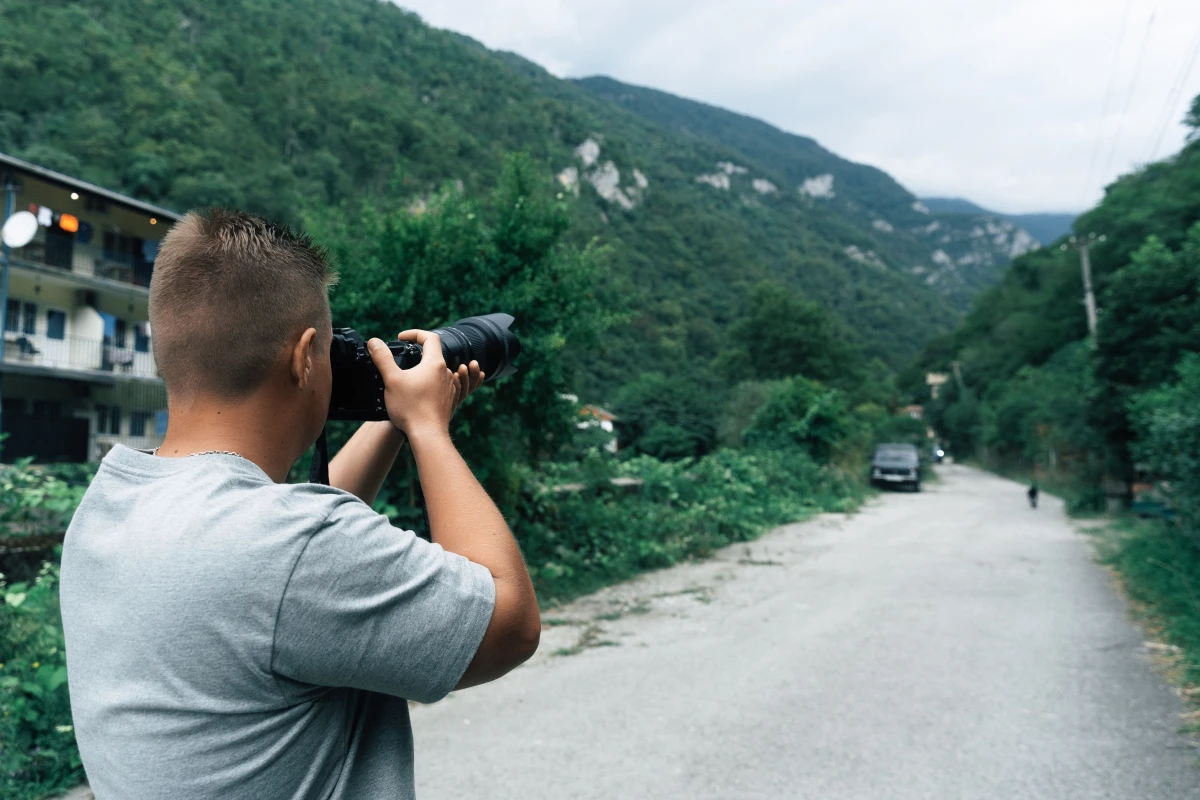
It is not unusual to see people waiting in long queues just to take a photograph at a particular viewpoint. Some visitors spend more time adjusting camera angles than looking at the scenery. Others visit famous destinations, take a few pictures, upload them online, and move on to the next location.
This raises an interesting question: Are we still traveling to experience the world, or have we slowly started traveling to show the world that we have been somewhere?
When the photograph becomes the main experience
There is nothing wrong with taking photographs while traveling. In fact, photographs are one of the best ways to preserve memories. A picture of a mountain sunrise, a family vacation, or a quiet afternoon in an unfamiliar city can bring back feelings that words sometimes cannot describe.
The problem begins when taking the photograph becomes more important than experiencing the place.
Imagine visiting a beautiful lake surrounded by mountains. The water is calm, the weather is perfect, and the entire landscape feels peaceful. But instead of sitting beside the lake for a few minutes, you immediately start thinking about where to stand, how the picture should look, and whether the lighting is good enough.
You take twenty photographs, check them repeatedly, delete the ones you dislike, and spend the next few minutes writing a caption.
By the time you finish, the moment has changed.
You were physically present, but your attention was somewhere else.
This happens more often than we might admit. Sometimes, we become so focused on creating evidence of a beautiful experience that we forget to enjoy the experience itself.
How social media changed the way we choose destinations
Social media has completely transformed travel discovery.
In the past, people often chose destinations through recommendations from friends, travel magazines, television programs, or guidebooks. Today, a short video can introduce millions of people to a previously unfamiliar location.
A waterfall, a small village, a mountain viewpoint, or even a local restaurant can become internationally popular after appearing in a viral video.
Platforms such as Instagram and TikTok have made travel inspiration more accessible than ever. People can discover places, compare experiences, find accommodation, and learn practical travel information without leaving their homes.
This is a positive development in many ways. Small businesses can reach international audiences, local guides can promote their services, and destinations that were previously overlooked can receive attention.
However, social media has also changed the reasons people sometimes choose to travel.
Instead of asking, "What would I like to experience there?" some travelers begin with a different question: "What can I post from there?"
A destination becomes attractive not only because of its culture, history, food, or natural beauty, but also because of how it will look on a phone screen.
That difference may seem small, but it can influence the entire journey.
The pressure to make every trip look perfect
Social media has created an interesting kind of pressure around traveling.
A vacation is no longer always something people experience privately. It can also become something they feel expected to present publicly.
Beautiful hotel rooms, expensive restaurants, mountain adventures, airport photographs, and sunset views often fill social media feeds. After seeing these posts repeatedly, people may begin comparing their own trips with carefully selected moments from other people's holidays.
A simple vacation can suddenly feel ordinary.
Perhaps the hotel is not luxurious enough. Maybe the destination is not popular enough. The photographs do not look as impressive as the ones seen online.
This can create unrealistic expectations.
What people often forget is that social media usually shows the best few seconds of a much longer experience. It does not show the delayed flight, the uncomfortable bus ride, the unexpected rain, the expensive meal that was not worth the price, or the hours spent trying to find the perfect photograph.
A beautiful travel post does not necessarily represent a beautiful entire journey.
There is also a difference between wanting to share happiness and feeling the need to prove that life is exciting. The first can make traveling more enjoyable. The second can turn a holiday into another performance.
Are we missing the small moments that make travel meaningful?
Some of the most memorable parts of traveling are not necessarily the famous attractions.
They might be a conversation with a shopkeeper, an unexpected invitation for tea, the smell of food coming from a small restaurant, or getting slightly lost while exploring a neighborhood.
These moments rarely become viral social media content. They may not even look particularly interesting in a photograph.
But they are often the experiences that make a journey personal.
Consider visiting a traditional village in Nepal. You could spend the entire afternoon photographing mountain views, traditional houses, and beautiful landscapes. Those photographs might look wonderful online.
But another kind of experience could be sitting with a local family, learning how they prepare their food, listening to stories about village life, or understanding how the community changes between seasons.
Both experiences have value. Yet one offers something that cannot easily be captured through a camera.
Travel becomes more meaningful when we allow ourselves to experience places beyond their appearance.
When famous photo locations become crowded
There is another consequence of photograph-driven travel: the same locations can become overwhelmed by visitors.
When a particular viewpoint, street, beach, or building becomes popular online, thousands of people may want to recreate the same photograph.
This creates concentrated tourist demand.
Some destinations have experienced overcrowding, long queues, traffic problems, and pressure on local communities partly because certain locations have become social media attractions.
The famous village of Hallstatt in Austria is one example often discussed in conversations about tourism pressure and photography-driven popularity.
The village is naturally beautiful, but its popularity has also raised questions about how a small community can manage large numbers of visitors who want to experience and photograph the same scenery.
This is not to suggest that every visitor who takes a photograph contributes to overtourism. Rather, it shows how digital visibility can influence physical travel patterns.
When millions of people receive similar recommendations, they may all end up visiting the same few places, while other equally interesting destinations remain overlooked.
Social media can introduce us to the world, but it can also make the world feel smaller by encouraging everyone to visit the same locations.
The difference between remembering a place and showing it to others
There is a psychological difference between taking a photograph because you want to remember something and taking one because you want other people to see it.
Both are normal human behaviors. We naturally enjoy sharing exciting moments with friends and family. A photograph can also become a personal record of where we have been and what we have experienced.
But sometimes, the audience starts influencing the experience before it even happens.
You might choose an outfit specifically for a photograph, plan your day around the best lighting, or skip a local attraction because it does not offer anything interesting to post.
In those moments, travel decisions are no longer based entirely on personal curiosity. They are partly shaped by how other people might react to what you share.
A 2026 study published in the Journal of Sustainable Tourism examined this relationship between social media sharing motivations and tourist behavior. It explored how the desire to create shareable content can change the way visitors relate to destinations and their willingness to behave sustainably.
This is an interesting development because it suggests that the influence of social media goes beyond helping people discover places. It can also change how they behave once they arrive.
Travel influencers and the problem of unrealistic expectations
Travel influencers have become an important part of the modern tourism industry.
They introduce audiences to destinations, recommend hotels, review restaurants, share itineraries, and sometimes help small businesses attract customers from around the world.
Their work can be genuinely useful.
However, there is a difference between watching a travel video and understanding what it actually took to create it.
A 30-second video might show a beautiful beach without revealing that the creator arrived before sunrise, waited for an hour, paid for a special photography setup, or filmed several takes to get the right shot.
Some promotional content also presents destinations in ways that do not reflect ordinary visitor experiences.
This can create unrealistic expectations among travelers.
People arrive expecting the same perfect scenery, empty streets, comfortable weather, and beautiful experiences they saw online. When reality looks different, disappointment follows.
Sometimes the destination is not the problem. The expectations created before the journey are.
Travel content becomes more useful when creators show the complete experience, including practical costs, accessibility, crowds, local customs, and the less glamorous parts of traveling.
People do not need every holiday to look perfect. They need honest information to make better travel decisions.
Nepal: Beyond the photographs of mountains
Nepal is a particularly interesting example of how photography influences travel.
For many international visitors, the country is associated with Mount Everest, the Himalayas, trekking routes, temples, and beautiful mountain landscapes.
These images have helped Nepal become recognizable around the world.
But Nepal is much more than a collection of beautiful backgrounds.
It is a country of different languages, food traditions, festivals, communities, architecture, and everyday experiences. A visitor who only travels between famous viewpoints may leave with impressive photographs but limited understanding of the country.
Imagine visiting Kathmandu.
You could spend the day photographing temples and historic buildings, collecting pictures of famous squares, and moving from one popular attraction to another.
Or you could spend some time exploring a local market, tasting traditional food, talking with shopkeepers, learning about local festivals, and understanding why certain places hold cultural or religious importance.
The second experience may not produce the most impressive social media post, but it can create a much deeper connection with the destination.
The same applies to Pokhara, Chitwan, Mustang, and smaller Himalayan communities.
Nepal's tourism future should not depend only on how many people photograph its mountains. It should also depend on how many visitors understand its people, respect its culture, and contribute positively to local communities.
There is a difference between visiting Nepal and getting to know Nepal.
Can social media actually make travel better?
It would be unfair to blame social media for every problem associated with modern tourism.
In many ways, it has made traveling easier and more accessible.
A traveler can discover affordable accommodation, find public transportation information, learn about local food, read experiences from other visitors, and identify places that traditional guidebooks might overlook.
For people traveling alone, online communities can provide practical advice and help them feel more confident.
Social media also gives smaller destinations an opportunity to reach people without relying entirely on expensive tourism campaigns.
Research on destination marketing has found that social media can influence destination choices and help travelers discover places. A systematic review of 41 studies published in 2024 examined several factors involved in how social media shapes these decisions.
The real question, therefore, is not whether travelers should stop using social media.
It is whether we can use these platforms without allowing them to control the entire purpose of traveling.
There is nothing wrong with sharing a beautiful photograph after enjoying a wonderful afternoon. There is also nothing wrong with creating travel videos or documenting an adventure.
The difference is whether the content comes from the experience or the experience exists mainly to create the content.
How to enjoy traveling without turning everything into content
You do not need to leave your phone at home or stop taking photographs to become a more thoughtful traveler.
A few small changes can make a difference.
1. Spend the first few minutes without your camera.
When you arrive somewhere beautiful, take a moment to look around before reaching for your phone. Notice the surroundings and enjoy being there.
2. Do not plan every moment around photographs.
Leave some space in your itinerary for unexpected discoveries. Sometimes an unplanned walk or a conversation with a local person becomes the best part of a trip.
3. Look beyond viral destinations.
Explore lesser-known towns, local restaurants, community markets, and cultural experiences. They may offer something more personal than another crowded photography spot.
4. Respect people and private spaces.
Not every person, home, religious ceremony, or community event should become travel content. Ask permission before photographing people when appropriate, and follow local rules.
5. Share honest experiences.
If you create travel content, include useful information instead of presenting every destination as perfect. Mention practical challenges, costs, accessibility, and responsible visitor behavior.
6. Keep some memories private.
Not every beautiful moment needs to be uploaded. Some experiences can simply belong to you.
These suggestions are not rules for traveling. They are reminders that we can enjoy technology without allowing it to take over our attention.
The next generation of travel should be more about connection
The future of travel does not have to be a competition between people who take photographs and people who prefer to enjoy the scenery.
Photography is part of human storytelling. We have been documenting journeys long before smartphones and social media existed.
What has changed is the speed, reach, and public nature of sharing.
A photograph that was once kept in a family album can now reach thousands of strangers within seconds. A small viewpoint can become a global attraction almost overnight.
This creates new opportunities for destinations, but it also makes responsible travel more important.
Tourism businesses should promote authentic experiences rather than selling only picture-perfect locations. Influencers can help audiences understand the realities of travel, and destination authorities can encourage visitors to explore beyond overcrowded attractions.
Travelers, meanwhile, can remember that a destination is not a photography studio. It is a real place where people live, work, celebrate, and build their communities.
So, are we traveling to experience places or simply to photograph them?
Perhaps the honest answer is that we are doing both.
We want to experience new places, and we want to remember those experiences. We enjoy sharing beautiful moments, receiving appreciation, and showing friends and family what we have discovered.
There is nothing inherently wrong with that.
But somewhere along the way, some of us have started confusing the evidence of an experience with the experience itself.
Having hundreds of photographs does not necessarily mean we connected with a destination. Having thousands of views on a travel video does not mean we understood the place we visited.
A beautiful photograph can capture a moment, but it cannot always capture the feeling of standing there, the sound of the surroundings, the conversation with a stranger, or the unexpected experience that made the journey memorable.
Maybe the next time we travel, we should try something simple.
Take the photograph. Share it if you want. But also put your phone away for a while.
Watch the sunset without checking the screen. Taste the food without worrying about its presentation. Walk through an unfamiliar street without constantly searching for the next popular location.
Because years from now, you might forget how many likes a photograph received.
But you may still remember how a place made you feel.
The purpose of traveling should not be to collect photographs of places we have visited. It should be to collect experiences that stay with us long after we have returned home.
Frequently Asked Questions
What's Your Reaction?
 Like
0
 Dislike
0
 Love
0
 Funny
0
 Wow
0
 Sad
0
 Angry
0

Himalayan Trend is the editorial voice of himalayantrend.com, sharing informative, engaging, and thought-provoking stories on technology, business, finance, travel, tourism, world news, and current affairs. Through independent research and accessible storytelling, Himalayan Trend aims to keep readers informed about emerging trends, important developments, and ideas shaping Nepal, the Himalayan region, and the world. Our mission is to make knowledge accessible, highlight new perspectives, and connect local stories with global conversations.












Comments (0)