

Most Beautiful Places in the World: 25 Destinations That Look Almost Unreal
Discover 25 extraordinary destinations around the world, from the Italian Dolomites and Canadian Rockies to tropical islands, colorful lakes, dramatic deserts, and spectacular coastal landscapes.

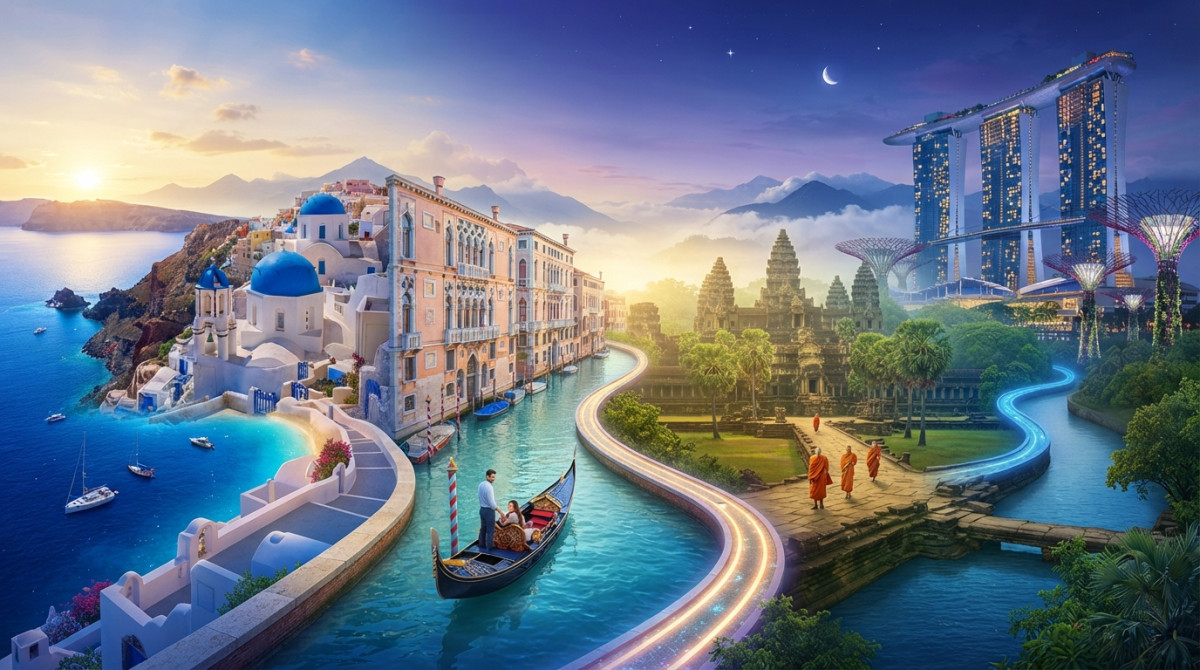
Imagine standing beside a turquoise lake surrounded by towering mountains. Picture walking along a coastline where white cliffs meet deep blue water, watching the sun disappear behind an endless desert, or discovering a tropical island where the sea appears almost impossibly clear.
These places are not scenes from fantasy films. They exist in different corners of our planet, each offering a reminder of how extraordinary the natural world can be.
The most beautiful places in the world are not all alike. Some are defined by mountains and glaciers, others by waterfalls, tropical beaches, ancient landscapes, colorful villages, or remarkable geological formations. Their beauty comes from different combinations of nature, culture, geography, and the way people experience them.
But choosing the world's most beautiful destinations is not an exact science. What looks extraordinary to one traveler may not be the most appealing place for another. Some people dream of remote wilderness, while others prefer peaceful islands, dramatic coastlines, or landscapes that change with every season.
In this guide, we explore 25 destinations that deserve a place on a travel bucket list. From famous natural wonders to less familiar landscapes, these places demonstrate just how diverse and beautiful our world can be.
1. The Dolomites, Italy
The Dolomites are among Europe's most spectacular mountain landscapes. Located in northeastern Italy, this mountain range is known for its dramatic pale-colored peaks, steep rock walls, green valleys, and beautiful alpine lakes.
Unlike some mountain destinations that appear distant and inaccessible, the Dolomites offer a combination of impressive scenery and welcoming mountain communities. Small villages, winding roads, hiking trails, and traditional mountain restaurants make the region attractive to different kinds of travelers.
One of its most photographed locations is Lago di Braies, a lake surrounded by forested slopes and towering mountains. The scenery changes dramatically throughout the seasons, from green summer landscapes to snow-covered winter surroundings.
The Dolomites are also recognized as a UNESCO World Heritage property for their exceptional geological and scenic value.
Best time to visit: June to September for many hiking activities; winter for snow-based experiences.
Why visit: Dramatic mountain scenery, alpine lakes, hiking, photography, and traditional Italian mountain culture.
2. Banff National Park, Canada
<escape>Located in Alberta's Canadian Rockies, Banff National Park is a destination where turquoise lakes, snow-covered mountains, glaciers, and evergreen forests create extraordinary scenery.</escape>
Lake Louise and Moraine Lake are among its most famous attractions. Their distinctive blue-green appearance is influenced by fine rock particles carried into the lakes by glacial meltwater.
Visitors can explore mountain trails, enjoy scenic drives, take guided excursions, or simply spend time beside the lakes. The surrounding town of Banff also offers restaurants, accommodation, and access to outdoor activities.
Banff is particularly appealing because it combines dramatic wilderness with established visitor facilities.
Best time to visit: June to September for many hiking and lake activities; December to March for winter sports.
Why visit: Glacial lakes, mountain scenery, wildlife, photography, and outdoor adventure.
3. Ha Long Bay, Vietnam
Ha Long Bay is famous for its extraordinary seascape of limestone islands and rock formations rising from emerald-colored water.
Located in northern Vietnam, the bay contains thousands of limestone formations shaped by geological processes over millions of years. Some islands contain caves, hidden beaches, and distinctive vegetation.
One of the most memorable ways to experience the region is through a boat journey. Visitors can explore different sections of the bay, enjoy views from the water, and discover small communities and nearby islands.
The changing weather creates different moods across the landscape. Misty mornings can make the limestone formations appear almost like silhouettes emerging from the sea.
Best time to visit: Often October to April for relatively cooler and drier conditions, although weather varies.
Why visit: Limestone islands, scenic boat trips, caves, coastal landscapes, and Vietnamese culture.
4. Plitvice Lakes National Park, Croatia
Plitvice Lakes National Park is one of Europe's most remarkable natural landscapes.
The park contains interconnected lakes, waterfalls, streams, forests, and natural barriers formed through ongoing geological processes. Water flows between different levels, creating a landscape that changes in color and appearance throughout the year.
Wooden walking paths allow visitors to explore designated sections while enjoying views of the waterfalls and clear water.
The park's natural beauty is not simply about its blue and green lakes. It is also an important ecosystem supporting forests and wildlife.
Plitvice is recognized as a UNESCO World Heritage Site for its geological and ecological significance.
Best time to visit: Spring and autumn can offer pleasant walking conditions, while summer generally provides easier access to many visitor routes.
Why visit: Waterfalls, interconnected lakes, forest scenery, and nature photography.
5. Patagonia, Argentina and Chile
Patagonia is a vast region at the southern end of South America, shared by Argentina and Chile. It is famous for its enormous mountains, glaciers, turquoise lakes, open grasslands, and remote wilderness.
Among its best-known landscapes are the granite peaks of Torres del Paine in Chile and the dramatic mountain scenery surrounding Mount Fitz Roy in Argentina.
The region is ideal for travelers who enjoy outdoor exploration. Hiking routes, glacier excursions, wildlife observation, and scenic drives provide different ways to experience its immense landscapes.
Patagonia also demonstrates how different two neighboring countries can make one geographical region feel. Its scenery includes both rugged Andean mountains and broad open plains.
Best time to visit: November to March for many popular outdoor activities, depending on location and weather.
Why visit: Glaciers, dramatic mountains, hiking, wildlife, and remote landscapes.
6. Bora Bora, French Polynesia
Bora Bora is one of the world's most recognizable tropical island destinations.
Surrounded by a beautiful lagoon and coral reef, the island is famous for its clear water, green volcanic peaks, and white-sand beaches. Mount Otemanu dominates the landscape, creating a dramatic contrast with the calm lagoon below.
The destination is particularly well known for overwater accommodation, snorkeling, boat excursions, and luxury travel experiences.
However, Bora Bora is not only for luxury visitors. Exploring local communities, enjoying traditional food, and learning about Polynesian culture can make a trip more meaningful.
Best time to visit: May to October generally offers a drier season.
Why visit: Tropical lagoons, coral reefs, island scenery, snorkeling, and relaxation.
7. Lofoten Islands, Norway
The Lofoten Islands are a spectacular collection of islands above the Arctic Circle in northern Norway.
Their scenery combines sharp mountain peaks, fishing villages, white-sand beaches, deep blue water, and dramatic coastal roads. Traditional red fishing cabins add another distinctive feature to the landscape.
During summer, the midnight sun creates unusually long daylight hours. In winter, visitors may have opportunities to see the northern lights when conditions are favorable.
Lofoten is also an excellent destination for photographers because the scenery can change dramatically with the weather.
Best time to visit: June to August for long daylight hours; September to March for potential northern lights experiences.
Why visit: Arctic landscapes, fishing villages, mountain hikes, beaches, and northern lights.
8. Salar de Uyuni, Bolivia
Salar de Uyuni is the world's largest salt flat, covering an immense area in southwestern Bolivia.
During the dry season, the salt surface forms a vast white landscape that appears to stretch endlessly toward the horizon. During certain wet-season conditions, a thin layer of water can create a remarkable mirror effect, reflecting the sky and surrounding clouds.
The landscape feels almost unreal because its scale and lack of familiar visual reference points make distance difficult to judge.
Visitors commonly explore the salt flats through guided four-wheel-drive excursions. Nearby destinations include colorful lagoons, volcanic landscapes, and high-altitude desert environments.
Best time to visit: May to November for generally drier conditions; December to April for possible reflective water conditions, depending on rainfall and access.
Why visit: Mirror-like landscapes, salt formations, photography, and high-altitude scenery.
9. Cappadocia, Türkiye
Cappadocia is known for its unusual rock formations, underground cities, cave dwellings, and distinctive valleys.
Its landscape was shaped by volcanic activity and erosion, creating soft rock formations that developed into unusual structures often called fairy chimneys.
One of the region's most recognizable experiences is watching hot-air balloons rise over the valleys at sunrise. When weather conditions allow flights, dozens of colorful balloons can appear above the landscape.
Visitors can also explore ancient rock-cut churches, underground settlements, and traditional cave hotels.
Best time to visit: April to June and September to October for generally comfortable temperatures.
Why visit: Unusual geological formations, hot-air balloons, cave architecture, and historical landscapes.
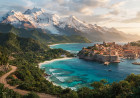
10. Amalfi Coast, Italy
The Amalfi Coast is one of the most beautiful coastal regions in southern Italy.
Its dramatic landscape features steep cliffs, colorful villages, terraced gardens, and winding roads overlooking the Mediterranean Sea.
Positano is famous for its colorful buildings rising along the hillside, while Amalfi and Ravello offer their own distinctive atmosphere and historical attractions.
The region is also known for seafood, local lemon products, Mediterranean cuisine, and scenic boat excursions.
Although the coastline is popular, travelers can make the experience more relaxing by visiting smaller towns, exploring on foot, and avoiding the busiest travel periods.
Best time to visit: April to June and September to October.
Why visit: Coastal scenery, historic villages, Italian cuisine, beaches, and Mediterranean culture.
11. Seychelles
The Seychelles is an Indian Ocean archipelago known for tropical islands, clear water, lush vegetation, and extraordinary granite rock formations.
Anse Source d'Argent on La Digue is among its most photographed beaches, with enormous granite boulders creating a distinctive coastal setting.
The islands also offer opportunities for snorkeling, diving, hiking, and wildlife observation. Some areas protect important habitats for rare plants and animals.
Travelers can explore different islands to experience a range of beaches, landscapes, and local communities.
Best time to visit: April, May, October, and November often provide favorable conditions, although the climate varies.
Why visit: Tropical beaches, granite formations, marine life, island culture, and relaxation.
12. Iceland's South Coast
Iceland's South Coast is a remarkable destination for travelers interested in dramatic natural landscapes.
The region includes waterfalls, black-sand beaches, glaciers, volcanic scenery, and rugged coastlines. Some of its best-known attractions include Seljalandsfoss, Skógafoss, and Reynisfjara Beach.
Each location offers a different experience. Waterfalls plunge from high cliffs, black volcanic sand creates striking coastal contrasts, and glaciers reveal the powerful geological forces that continue shaping Iceland.
Visitors should pay close attention to safety information, particularly near ocean waves, cliffs, and glacier areas.
Best time to visit: June to August for longer daylight hours; winter for a chance to experience snowy scenery and possible northern lights.
Why visit: Waterfalls, glaciers, volcanic beaches, and dramatic natural contrasts.
13. Zhangjiajie National Forest Park, China
Zhangjiajie National Forest Park is famous for its towering sandstone pillars rising above green valleys and forested slopes.
The unusual formations create a landscape that appears almost impossible, with narrow peaks extending high above the surrounding terrain.
The park has become internationally recognized for its dramatic viewpoints, glass walkways, mountain lifts, and hiking opportunities.
Some of the rock formations are frequently compared to imaginary floating mountains because of their shape and the mist that sometimes surrounds them.
The wider Wulingyuan Scenic Area contains a much larger collection of natural features, including ravines, caves, and forests.
Best time to visit: April to May and September to October are often popular for comfortable sightseeing conditions.
Why visit: Extraordinary rock formations, forest landscapes, panoramic viewpoints, and mountain scenery.
14. Lake Bled, Slovenia
Lake Bled is one of Central Europe's most picturesque destinations.
Located in the Julian Alps region of Slovenia, the lake is known for its small island, historic church, surrounding mountains, and medieval castle overlooking the water.
Visitors can take traditional wooden boats to the island, walk along the lakeside paths, or explore viewpoints that reveal the entire landscape.
The surrounding region also offers access to hiking, cycling, and outdoor activities.
Lake Bled is especially beautiful when the seasons change. Autumn colors and winter snow can transform the scenery into something completely different.
Best time to visit: May to September for many outdoor activities; autumn and winter for different seasonal scenery.
Why visit: Alpine lake scenery, historic architecture, boating, and peaceful outdoor experiences.
15. Raja Ampat, Indonesia
Raja Ampat is an extraordinary island region in Indonesia's West Papua area, famous for its marine biodiversity and spectacular tropical landscapes.
Its clear water, coral reefs, small green islands, and limestone formations create one of the most remarkable coastal environments in Southeast Asia.
The region is especially attractive to divers and snorkelers because of the incredible variety of marine life found in its waters.
However, Raja Ampat's appeal extends beyond underwater experiences. Kayaking, island exploration, birdwatching, and visiting local communities can provide a broader understanding of the destination.
Responsible tourism is especially important in such an ecologically sensitive environment.
Best time to visit: October to April is commonly favored for many diving conditions, though local weather varies.
Why visit: Coral reefs, marine biodiversity, tropical islands, diving, and nature exploration.
16. Namib Desert, Namibia
The Namib Desert is one of the world's most extraordinary desert environments.
Its enormous red-orange sand dunes, open landscapes, and dramatic light create a setting unlike almost anywhere else.
Sossusvlei and Deadvlei are among its most famous locations. Deadvlei is particularly striking because the remains of ancient trees stand against pale ground surrounded by towering dunes.
The desert is also home to specially adapted plants and animals that survive in an environment with extremely limited rainfall.
Sunrise and sunset provide beautiful opportunities to experience the changing colors of the sand.
Best time to visit: May to October, when temperatures are generally cooler and conditions are often more comfortable.
Why visit: Giant dunes, desert photography, unusual landscapes, and unique wildlife adaptations.
17. Torres del Paine National Park, Chile
Torres del Paine is one of the most spectacular national parks in South America.
Located in Chilean Patagonia, it is famous for granite towers, glaciers, lakes, forests, and open mountain landscapes.
The park's iconic granite peaks rise above the surrounding terrain, creating one of the most recognizable mountain scenes in the region.
Travelers can explore the area through day hikes, multi-day trekking routes, guided tours, and scenic drives.
Weather can change quickly, so visitors should prepare for strong winds, rain, and sudden temperature changes.
Best time to visit: November to March for many hiking opportunities.
Why visit: Mountain trekking, glaciers, wildlife, lakes, and dramatic Patagonian scenery.
18. Jiuzhaigou Valley, China
Jiuzhaigou Valley is a remarkable natural area known for colorful lakes, waterfalls, forests, and mountain scenery.
Its lakes can display shades of blue, turquoise, and green depending on water conditions, depth, light, and mineral content.
Waterfalls flow between forested slopes, while mountain peaks create a dramatic background throughout the valley.
The area is also important for biodiversity and conservation, making it more than simply a scenic tourist destination.
Walking along designated trails allows visitors to experience different sections of the landscape while helping protect its fragile environment.
Best time to visit: September and October are particularly popular for autumn colors, although other seasons offer different scenery.
Why visit: Colorful lakes, waterfalls, forests, and mountain landscapes.
19. Komodo National Park, Indonesia
Komodo National Park combines dramatic islands, beautiful beaches, coral reefs, and distinctive wildlife.
Located in Indonesia, the park is best known as the natural habitat of Komodo dragons, the world's largest living lizard species.
Its landscapes include dry hills, rugged coastlines, turquoise water, and small islands surrounded by coral-rich seas.
Padar Island is particularly famous for its elevated viewpoint, where several differently colored bays create a remarkable panoramic scene.
Visitors can explore through guided boat trips, hiking, snorkeling, and wildlife experiences.
Because the park protects sensitive ecosystems and potentially dangerous wildlife, travelers should follow ranger instructions and local regulations.
Best time to visit: April to November is generally favored for many outdoor and marine activities.
Why visit: Komodo dragons, island scenery, beaches, hiking, and marine biodiversity.
20. The Swiss Alps, Switzerland
The Swiss Alps offer some of the most recognizable mountain scenery in Europe.
Snow-covered peaks, deep valleys, alpine villages, mountain railways, and clear lakes create a landscape that attracts visitors throughout the year.
Destinations such as Zermatt, Grindelwald, Lauterbrunnen, and the Jungfrau region provide different ways to experience the mountains.
Visitors can enjoy scenic train journeys, hiking, skiing, mountain viewpoints, and traditional Swiss villages.
The region's combination of natural beauty and transportation infrastructure makes it appealing even to travelers who do not want demanding outdoor adventures.
Best time to visit: June to September for many hiking routes; December to March for winter sports.
Why visit: Mountain scenery, alpine villages, scenic railways, hiking, and skiing.
21. Faroe Islands, Denmark
The Faroe Islands are a remote North Atlantic destination known for dramatic cliffs, green mountains, waterfalls, and small coastal villages.
Their landscapes are shaped by the ocean and changing weather. Mist can move across the mountains, while waterfalls flow from steep cliffs toward the sea.
The islands are especially appealing to travelers who enjoy peaceful scenery, photography, hiking, and destinations away from major tourist centers.
Traditional settlements and local culture add another dimension to the experience.
Visitors should prepare for rapidly changing weather and respect local access restrictions, especially around cliffs and nesting wildlife.
Best time to visit: May to September for generally milder conditions and longer daylight hours.
Why visit: Remote coastal landscapes, waterfalls, mountain scenery, and traditional villages.
22. Palawan, Philippines
Palawan is one of Southeast Asia's most beautiful island destinations.
Its scenery includes limestone cliffs, hidden lagoons, tropical beaches, coral reefs, and clear blue water.
El Nido and Coron are among the region's best-known visitor areas. Boat excursions allow travelers to explore lagoons, beaches, snorkeling locations, and dramatic island formations.
The region is also important for marine ecosystems and biodiversity.
Visitors can choose between relaxed beach holidays and more adventurous trips involving kayaking, diving, hiking, and island exploration.
Best time to visit: November to May is generally favored for drier weather, though local conditions vary.
Why visit: Limestone islands, hidden lagoons, beaches, diving, and tropical landscapes.
23. Picos de Europa, Spain
The Picos de Europa mountain range in northern Spain offers an extraordinary combination of rugged peaks, deep valleys, green meadows, and nearby coastal scenery.
The mountains rise dramatically above surrounding landscapes, creating impressive views and opportunities for outdoor exploration.
Visitors can explore traditional villages, hiking trails, mountain viewpoints, and scenic routes through the region.
The area's natural beauty is particularly distinctive because high mountains and the Atlantic-influenced environment exist relatively close to one another.
Best time to visit: May to September for many hiking activities, with weather varying by altitude.
Why visit: Mountain landscapes, hiking, rural villages, and scenic viewpoints.
24. The Great Ocean Road, Australia
The Great Ocean Road is one of Australia's most famous coastal journeys.
Located in Victoria, this scenic route passes through beautiful beaches, coastal forests, small towns, and dramatic ocean viewpoints.
Its most famous natural attraction is the Twelve Apostles, a collection of limestone formations rising from the Southern Ocean.
The coastline also contains natural arches, cliffs, walking trails, and viewpoints that make the drive rewarding even beyond its most famous landmark.
Travelers can explore at their own pace, stopping at different towns and beaches along the way.
Best time to visit: September to May offers many comfortable driving conditions, although the route can be enjoyed throughout the year with appropriate preparation.
Why visit: Coastal scenery, dramatic cliffs, road trips, beaches, and photography.
25. The Maldives
The Maldives is a tropical island nation in the Indian Ocean known for white-sand beaches, coral atolls, turquoise lagoons, and remarkable marine environments.
Its geography is distinctive because the country consists of hundreds of islands spread across a large area of ocean.
Many visitors stay at resort islands, while others explore local islands to experience everyday Maldivian life, food, and culture.
Snorkeling and diving are among the most popular activities because the surrounding waters support coral reefs and a variety of marine species.
The Maldives is also vulnerable to environmental challenges, including sea-level rise and coral reef degradation, making conservation especially important.
Best time to visit: November to April is generally the drier period.
Why visit: Tropical beaches, coral reefs, marine life, island experiences, and relaxation.
What Makes a Place Truly Beautiful?
A destination does not have to be famous to be beautiful. In fact, some of the most memorable places are those that receive less attention than internationally recognized tourist hotspots.
Beauty can come from several different things.
Natural landscapes
Mountains, forests, waterfalls, lakes, deserts, and coastlines demonstrate the extraordinary variety of Earth's geography. Some landscapes are shaped over millions of years, while others continue changing through glaciers, rivers, volcanoes, and weather.
Cultural character
A beautiful destination is not always defined by scenery. Traditional architecture, historic neighborhoods, local markets, and community traditions can make a place memorable.
Changing seasons
Some destinations look completely different throughout the year. A mountain valley in summer may be green and full of wildflowers, while winter transforms it into a snowy landscape.
The experience itself
Sometimes the beauty of a destination comes from the experience of being there: watching the sunrise, meeting local people, discovering a quiet walking trail, or enjoying a meal with a view.
The most meaningful journeys often combine scenery with experiences that cannot be captured in a photograph.
How to Choose the Right Beautiful Destination for Your Next Trip
With so many remarkable places to explore, choosing where to travel can feel difficult. The best destination is not necessarily the one with the most attractive photographs. It should also match your interests, budget, available time, and travel expectations.
Consider these factors before making a decision.
1. Decide what type of scenery you enjoy
Do you prefer mountains, beaches, forests, lakes, deserts, or coastal villages?
A traveler who enjoys hiking may prefer Patagonia or the Swiss Alps, while someone looking for a tropical holiday may prefer Bora Bora, Palawan, or the Maldives.
2. Research travel costs
Some destinations are expensive because of accommodation, transport, and limited access. Others can be explored more affordably through local guesthouses, public transportation, and independent travel.
Consider the complete cost rather than only flight prices.
3. Check weather and seasonal conditions
The same destination can offer very different experiences depending on when you visit.
Research rainfall, temperatures, daylight hours, seasonal closures, and local travel conditions before booking.
4. Think about accessibility
Some beautiful places require long hikes, boat transfers, specialized transportation, or multi-day journeys.
Consider your physical comfort, available time, and the facilities offered at the destination.
5. Leave space for unexpected experiences
Do not plan every hour of your holiday around famous viewpoints.
Explore local neighborhoods, try regional food, visit small communities, and allow time for discoveries that were not part of the original itinerary.
Responsible Travel: Keeping Beautiful Places Beautiful
The growing popularity of beautiful destinations brings responsibility.
Natural landscapes can be affected by overcrowding, pollution, habitat destruction, and careless tourism. Coral reefs, mountain environments, wildlife habitats, and small island communities can be particularly vulnerable to environmental pressures.
Travelers can make a positive difference by:
-
Following local environmental rules and protected-area guidelines.
-
Avoiding littering and reducing single-use plastic.
-
Respecting wildlife and maintaining safe distances.
-
Supporting locally owned accommodation, restaurants, and tour operators.
-
Staying on marked trails where required.
-
Respecting cultural traditions and local communities.
-
Choosing responsible operators for diving, wildlife, and adventure activities.
The purpose of travel should not only be to experience beautiful places. It should also be to help preserve them.
Final Thoughts
Our planet is filled with places that can make us stop, look around, and appreciate the extraordinary world we live in.
From the towering peaks of the Dolomites to the tropical waters of Raja Ampat, from the colorful lakes of China to the vast desert landscapes of Namibia, each destination offers something different.
But the beauty of travel is not limited to collecting photographs or visiting famous places. It is also about understanding unfamiliar environments, experiencing different cultures, meeting people, and discovering perspectives that may change how we see the world.
You may never visit all 25 destinations. You do not have to.
Choose the places that inspire your curiosity, travel responsibly, and give yourself enough time to experience them beyond the photographs.
Sometimes the most beautiful place in the world is simply the place that makes you feel grateful to be there.
Frequently Asked Questions
What's Your Reaction?
 Like
0
 Dislike
0
 Love
0
 Funny
0
 Wow
0
 Sad
0
 Angry
0












Comments (0)