

How to Build an Emergency Fund: A Complete Beginner's Guide
Unexpected expenses can disrupt even a carefully planned budget. Building an emergency fund can help you prepare for situations such as medical bills, vehicle repairs, job loss, or urgent household expenses. This beginner-friendly guide explains how much to save, where to keep emergency savings, how to build your fund with a limited income, and how to develop consistent saving habits.

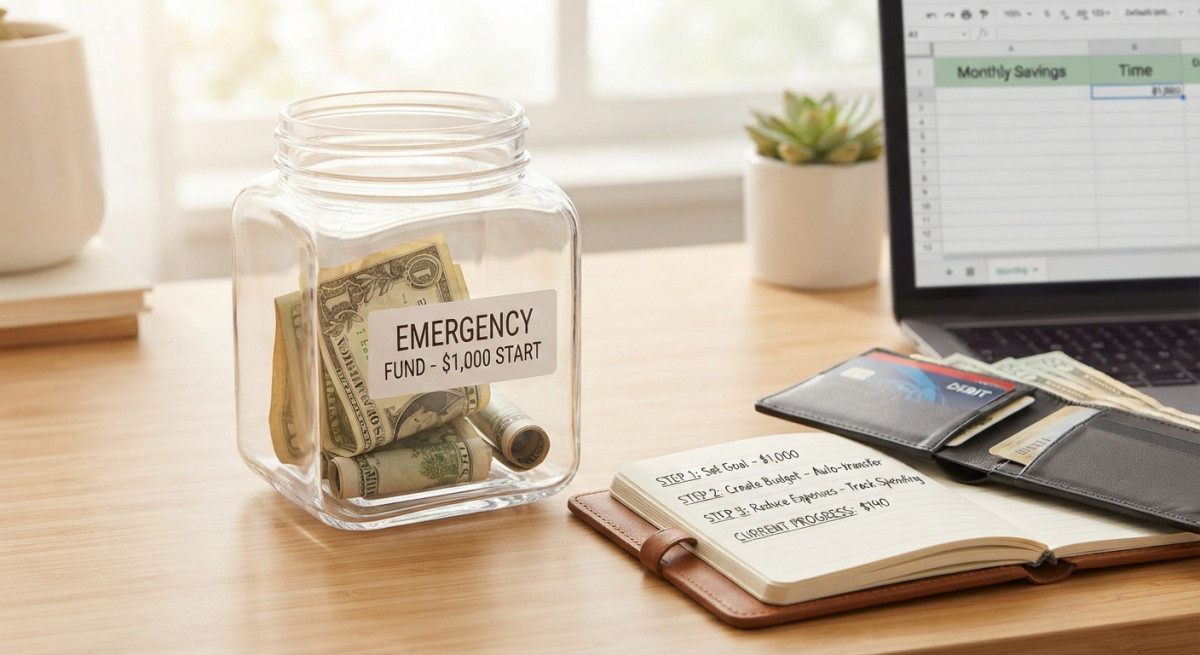
How to Build an Emergency Fund: A Complete Beginner's Guide
Life is unpredictable. An unexpected medical bill, vehicle repair, household emergency, or sudden loss of income can create financial pressure when you least expect it. Even people with stable jobs and regular monthly income can face situations that require money immediately.
Without savings, an unexpected expense may force you to use a credit card, borrow money, delay important payments, or withdraw funds intended for another financial goal.
This is why building an emergency fund is an important part of personal financial planning.
An emergency fund is money you set aside specifically for unexpected expenses and financial difficulties. It provides a financial cushion that can help you manage difficult situations without completely disrupting your everyday finances.
The good news is that you do not need a high income to start building one. You can begin with a small amount, develop a consistent saving habit, and gradually increase your savings as your financial situation improves.
In this guide, we will explain what an emergency fund is, how much you should save, where to keep the money, and how to build your savings step by step.
What Is an Emergency Fund?
An emergency fund is a dedicated amount of money reserved for unexpected financial situations.
Unlike regular savings intended for vacations, shopping, education, or major purchases, emergency savings are specifically meant to help you handle expenses that are difficult to predict.
Common examples include:
-
Unexpected medical or dental bills
-
Emergency vehicle repairs
-
Urgent home repairs
-
Temporary unemployment
-
Reduced working hours or income
-
Emergency travel due to family circumstances
-
Essential expenses during a financial disruption
For example, imagine that your monthly income covers your rent, groceries, transportation, and other regular expenses. Suddenly, your vehicle needs a $900 repair.
If you have an emergency fund, you may be able to pay for the repair without borrowing money or missing other important payments.
An emergency fund does not prevent financial problems from happening. Instead, it gives you more options when unexpected situations arise.
Why Is an Emergency Fund Important?
Many people focus on earning more money, investing, or purchasing assets without first preparing for unexpected expenses.
However, financial protection is an important foundation of a healthy financial plan.
Here are some reasons why building an emergency fund matters.
1. Helps You Handle Unexpected Expenses
Unexpected costs can appear without warning. A broken appliance, medical bill, or urgent vehicle repair may require immediate attention.
Having money set aside can make these situations easier to manage.
Instead of searching for a loan or using a credit card, you may be able to pay for the expense using your savings.
2. Reduces Dependence on Credit Cards and Loans
Borrowing money can provide temporary relief, but interest charges and fees may make an unexpected expense more expensive over time.
For example, if you use a credit card to cover an emergency and cannot repay the balance in full, interest may accumulate.
Emergency savings can reduce the need to borrow for certain unexpected expenses.
3. Provides Financial Support During Job Loss
Losing a job or experiencing reduced working hours can affect your ability to pay regular bills.
An emergency fund can help cover essential expenses while you search for employment, explore new opportunities, or adjust your financial situation.
This can provide valuable time to make decisions without immediately facing every financial obligation.
4. Protects Other Financial Goals
Imagine that you are saving money for education, a home, a business, or retirement.
An unexpected expense could force you to withdraw money from those savings.
A separate emergency fund can help protect your progress toward these goals.
5. Provides Greater Financial Confidence
Knowing that you have money available for unexpected situations can make financial planning feel more manageable.
It does not mean that every problem will be easy to solve, but having a financial reserve can reduce uncertainty and give you more flexibility.
How Much Money Should You Have in an Emergency Fund?
One of the most common questions beginners ask is how much money they should save.
A commonly used guideline is to build an emergency fund covering three to six months of essential living expenses.
However, this is not a universal requirement. Your ideal savings target depends on your income stability, household responsibilities, location, insurance coverage, debt, and financial circumstances.
For example, someone with a stable job, two household incomes, and relatively low expenses may have different needs from a freelancer whose income changes every month.
Start by Calculating Your Essential Monthly Expenses
Before deciding how much to save, calculate the money you need for essential living costs.
Consider including:
-
Rent or mortgage payments
-
Groceries and basic household supplies
-
Utilities
-
Essential transportation
-
Health insurance and necessary medical costs
-
Minimum debt payments
-
Essential childcare expenses
-
Other unavoidable financial commitments
Do not automatically include every lifestyle expense. Focus on what you would need to maintain basic financial stability during a difficult period.
Example: Emergency Fund for Three to Six Months
Suppose your essential monthly expenses are $2,000.
| Savings Period | Emergency Fund Target |
|---|---|
| 1 month | $2,000 |
| 2 months | $4,000 |
| 3 months | $6,000 |
| 4 months | $8,000 |
| 5 months | $10,000 |
| 6 months | $12,000 |
In this example, a three-month emergency fund would be $6,000, while a six-month fund would be $12,000.
These are illustrative targets. You can start with a smaller amount and gradually work toward a larger reserve.
Who May Need a Larger Emergency Fund?
A larger savings cushion may be worth considering if you:
-
Work as a freelancer or independent contractor.
-
Have irregular or seasonal income.
-
Are the primary income earner in your household.
-
Support children or other family members.
-
Work in an industry with frequent employment changes.
-
Have significant essential monthly expenses.
-
Have limited insurance coverage for certain financial risks.
The right amount should reflect your actual circumstances rather than a number you feel pressured to reach.
How to Build an Emergency Fund: 8 Practical Steps
Building an emergency fund may seem difficult when you have many monthly expenses. However, breaking the process into smaller steps can make it easier.
Step 1: Set Your First Savings Goal
Do not begin by worrying about saving thousands of dollars.
Set a smaller target that feels achievable based on your current income.
For example, your first goal could be $250, $500, or $1,000.
Once you reach your initial target, you can establish another goal.
A smaller starting point can help you develop confidence and build a consistent savings habit.
Step 2: Review Your Monthly Budget
Your monthly budget can help identify how much money you may be able to save.
Review your income and expenses carefully.
Look for opportunities to reduce costs, such as:
-
Unused subscriptions
-
Frequent food delivery
-
Unnecessary shopping
-
Expensive entertainment habits
-
Unused memberships
-
Avoidable bank or service fees
You do not need to eliminate every enjoyable expense. Even a small adjustment to your spending may create room for regular savings.
If you have already created a monthly budget, use it as the starting point for your emergency savings plan.
Step 3: Decide How Much to Save Each Month
Choose a savings amount that fits your financial situation.
For example, if you can save $100 every month, that is a useful starting point.
Here is how different monthly contributions can grow over time, without including interest:
| Monthly Savings | After 6 Months | After 12 Months |
|---|---|---|
| $25 | $150 | $300 |
| $50 | $300 | $600 |
| $100 | $600 | $1,200 |
| $150 | $900 | $1,800 |
| $200 | $1,200 | $2,400 |
| $300 | $1,800 | $3,600 |
These examples show that regular contributions can build meaningful savings over time.
Choose an amount you can maintain instead of setting an unrealistic target that makes you stop saving after a few months.
Step 4: Open a Separate Savings Account
Keeping emergency savings separate from your everyday spending money can help you avoid using the fund for unnecessary purchases.
Consider a savings account that offers:
-
Appropriate deposit protection in your country
-
Easy access to your money
-
Low or no maintenance fees
-
Competitive interest where available
-
Clear withdrawal terms
-
Reliable online or mobile banking
If you live in the United States, eligible deposits at FDIC-insured banks are generally protected up to applicable insurance limits. Credit unions may offer deposit protection through the NCUA.
In other countries, check the relevant deposit-protection system and eligibility rules.
The most important consideration is that your emergency money should be safe and accessible when you genuinely need it.
Step 5: Automate Your Savings
One of the easiest ways to develop a consistent savings habit is to automate contributions.
You can arrange for a specific amount to move from your checking account into your savings account after receiving your paycheck.
For example:
-
Save $25 every week.
-
Save $50 every payday.
-
Save $100 at the beginning of each month.
Choose a schedule that matches your income.
Before setting up automatic transfers, make sure your account will have enough money available to avoid overdrafts or other fees.
Automatic saving reduces the need to make the same decision repeatedly and helps you stay consistent.
Step 6: Save Extra Income When Possible
You do not have to depend entirely on your regular salary to build an emergency fund.
You can use additional income to accelerate your savings.
Possible sources include:
-
Tax refunds
-
Freelance payments
-
Bonuses
-
Gifts
-
Side-business earnings
-
Income from temporary work
-
Money received from selling unused belongings
For example, if you receive a $500 bonus, you might decide to place part or all of it into your emergency savings.
The exact amount depends on your other financial priorities and obligations.
Step 7: Increase Your Contributions Gradually
As your income improves or your expenses decrease, consider increasing your monthly savings contribution.
For example, you might start with $50 per month and increase it to $75 after a few months.
If you receive a salary increase, you could direct part of the additional income toward your emergency fund.
Gradual increases can help you build savings without making major changes to your lifestyle all at once.
Step 8: Review Your Progress Regularly
Check your emergency fund every month.
Ask yourself:
-
How much have I saved?
-
Am I contributing consistently?
-
Have my monthly expenses changed?
-
Do I need to increase my target?
-
Have I used any money from the fund?
-
Do I need to replenish it?
Your emergency fund should change as your life changes.
For example, moving to a more expensive city, having a child, changing careers, or becoming self-employed may increase the amount you need.
Where Should You Keep Your Emergency Fund?
Choosing the right place for your emergency savings is just as important as deciding how much to save.
The purpose of an emergency fund is to provide access to money when unexpected expenses occur. Therefore, it should generally be kept somewhere relatively safe and accessible rather than exposed to significant investment risk.
Here are some common options.
1. High-Yield Savings Account
A high-yield savings account may offer a higher interest rate than a traditional savings account.
It can be a useful option for emergency savings because it combines access to money with the potential to earn interest.
However, interest rates can change, and account requirements, withdrawal limits, and fees vary between financial institutions.
2. Traditional Savings Account
A regular savings account is another straightforward option.
It may provide convenient access through your existing bank, although the interest rate may be lower than some alternatives.
For people who prioritize simplicity and accessibility, this can be a practical choice.
3. Money Market Deposit Account
Some banks and credit unions offer money market deposit accounts that combine savings features with certain transaction privileges.
Review minimum balance requirements, fees, withdrawal rules, and applicable deposit insurance before choosing one.
Do not confuse a bank money market deposit account with a money market mutual fund. They are different financial products and have different risks and protections.
4. Short-Term Deposits or Certificates
Some people consider certificates of deposit or similar fixed-term savings products.
These may offer a predictable interest rate, but withdrawing money before maturity can involve penalties or restrictions.
Because emergency money needs to be accessible, avoid locking away the entire fund in products that make withdrawals difficult or expensive.
Should You Invest Your Emergency Fund in Stocks or Cryptocurrency?
Generally, money intended for immediate emergencies should not be placed in highly volatile investments.
Stock markets and cryptocurrency prices can change significantly. You may need to sell investments during a market decline to pay an unexpected bill.
An emergency fund has a different purpose from an investment portfolio.
Investments are generally intended to support longer-term financial growth, while emergency savings are intended to provide financial protection and liquidity.
Emergency Fund vs. Regular Savings: What Is the Difference?
People sometimes use the terms savings and emergency fund interchangeably, but they serve different purposes.
| Emergency Fund | Regular Savings |
|---|---|
| Used for unexpected expenses | Used for planned financial goals |
| Supports financial protection | Supports future purchases and plans |
| Should be relatively accessible | May have flexible withdrawal plans |
| Intended for genuine emergencies | Can be used when a planned goal arrives |
| Helps reduce dependence on borrowing | Helps fund lifestyle and long-term goals |
For example, money saved for a vacation should not automatically be considered an emergency fund.
Keeping separate savings goals can make it easier to understand what money is available for different purposes.
When Should You Use Your Emergency Fund?
Having an emergency fund does not mean you should never touch it.
It exists specifically to help you manage unexpected financial situations.
However, establishing some guidelines can prevent unnecessary withdrawals.
Situations When Using It May Make Sense
You may consider using your emergency fund for:
-
Unexpected medical expenses
-
Essential vehicle repairs
-
Urgent home repairs
-
Necessary travel due to a family emergency
-
Temporary loss of employment income
-
Essential bills during a financial disruption
These are examples rather than an exhaustive list. Whether an expense qualifies depends on your financial situation.
Situations When You Should Avoid Using It
Your emergency fund should generally not be used for:
-
Regular shopping
-
Vacations
-
Entertainment
-
Luxury purchases
-
Planned upgrades
-
Everyday expenses already included in your budget
If you want to purchase something that is not an emergency, consider creating a separate savings goal.
What Happens If You Use Your Emergency Fund?
Using your emergency savings is not a financial failure.
If you experience a genuine emergency and need to withdraw money, that is exactly what the fund is designed for.
After handling the situation, review your budget and create a plan to rebuild the savings you used.
You can restart with smaller contributions if necessary and gradually work toward your previous target.
How to Build an Emergency Fund With a Low Income
Saving money can be especially difficult when most of your income is already committed to essential expenses.
However, you do not need to wait until you earn more to begin.
Consider these practical strategies.
Start With a Very Small Amount
Even $5 or $10 saved regularly can help you establish a habit.
The initial goal is not to accumulate a large amount immediately. It is to create a system that allows you to save consistently.
Review Essential Expenses
Look at your housing, transportation, food, communication, and other recurring costs.
If possible, identify opportunities to reduce expenses without affecting essential needs.
Save Whenever You Receive Extra Money
If you receive occasional additional income, consider directing a portion toward emergency savings.
This can be particularly helpful if your regular income is limited.
Avoid Comparing Your Savings With Others
Someone earning more money or having fewer financial responsibilities may be able to save more.
Your emergency fund should reflect your own income and expenses.
Focus on improving your financial position gradually rather than comparing your progress with someone else's.
Consider Increasing Your Income
If your expenses already consume most of your earnings, reducing spending may not be enough.
You could explore opportunities for additional income through freelance work, part-time employment, professional skills, or a small business.
Any additional income should be balanced against the costs, time, and responsibilities involved.
Common Emergency Fund Mistakes to Avoid
Building savings is important, but certain mistakes can make your emergency fund less effective.
1. Waiting Until You Earn More
Many people postpone saving because they believe they need a higher salary.
Starting small is usually more practical than waiting for the perfect financial situation.
2. Setting an Unrealistic Savings Target
A large target can feel overwhelming if you are just beginning.
Break your goal into smaller milestones so you can measure progress.
3. Keeping Emergency Money in Risky Investments
Emergency savings should not depend on market performance.
Avoid placing money you may need immediately into highly volatile assets.
4. Mixing Emergency Savings With Everyday Spending
If your emergency fund is in the same account you use for daily purchases, it may be easier to spend accidentally.
Consider using a separate account and clearly identifying its purpose.
5. Forgetting to Rebuild the Fund
After using your emergency savings, make a plan to replenish it.
Even small contributions can help restore your financial cushion.
6. Ignoring Changes in Your Lifestyle
Your financial needs may increase as your responsibilities change.
Review your target whenever you experience a significant change in income, housing costs, family circumstances, or employment.
Conclusion
An emergency fund is one of the most practical foundations of personal financial security. It helps you prepare for unexpected expenses, manage income disruptions, and reduce the need to depend on loans or credit cards during difficult situations.
You do not need to build a large fund immediately. Start with a realistic target, review your monthly expenses, save consistently, and gradually increase your contributions.
The most important part is getting started and maintaining the habit.
Unexpected financial situations may be impossible to predict, but you can take steps today to become better prepared for tomorrow.
Disclaimer: This article is for general educational and informational purposes only. It does not constitute individualized financial, tax, investment, or legal advice. Savings products, deposit protections, and financial regulations vary by country. Consider consulting a qualified financial professional for guidance based on your circumstances.
Frequently Asked Questions
What's Your Reaction?
 Like
0
 Dislike
0
 Love
0
 Funny
0
 Wow
0
 Sad
0
 Angry
0












Comments (0)